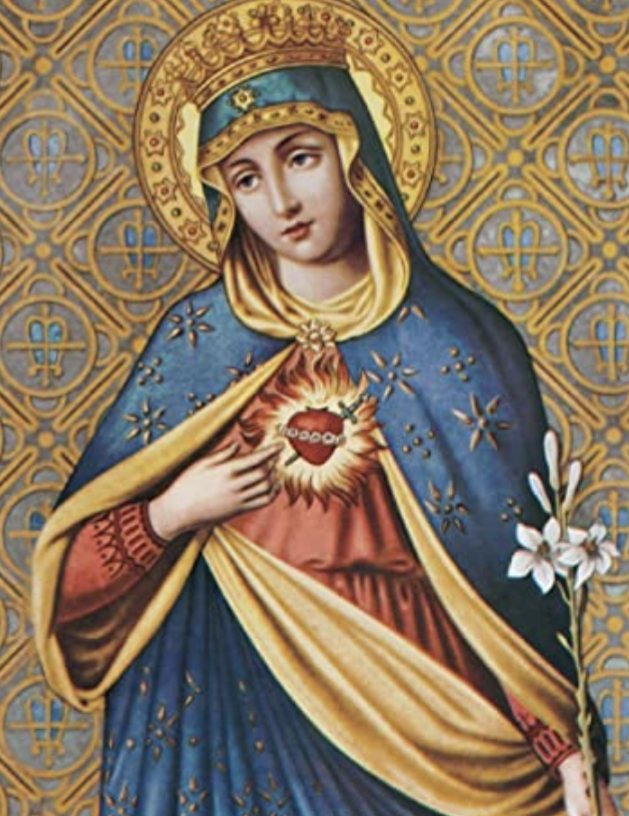
The Memorare Prayer: Our Guide to Jesus Through Mary


Sponsored: This article is made possible by Matrivi supporting quality and engaging Catholic content.


The Memorare prayer begins with “Remember” – a gentle reminder that we can approach the Blessed Virgin Mary with confidence in her unfailing intercession. This beautiful prayer encapsulates a profound theological truth that resonates with the heart of the Catholic faith: Mary serves as our surest guide to her Son, Jesus Christ. Like a well-worn path that leads home, Mary provides the most direct route to encounter Christ in our spiritual journey.

Where Mary is, so too is Jesus. This simple yet profound theology is evident even to children who instantly recognize Mother and Son in holy icons. The innocence of a child pointing to an image and exclaiming “Gee-sus! Mary!” captures perfectly what the Church Fathers spent centuries articulating. Mary’s primary purpose is always to lead us to Christ.

For many Catholics, the Memorare holds a special place in their hearts. Learning this prayer word by word in middle school classrooms creates lasting memories that grow more meaningful with time and deeper understanding of Mary’s role in salvation. Mary’s constant maternal care for the faithful throughout centuries doesn’t leave anyone who seeks her help “unaided.” The prayer confidently asserts this truth not merely as poetic language, but as a testament to her enduring protection.

Mary: The Theological GPS to Christ

Like a divine GPS, Mary unfailingly guides us toward her Son. She doesn’t simply point the way – she accompanies us on the journey, offering direction, protection, and unwavering love. As the “Star of the Sea” (Stella Maris), Mary serves as our guiding light through life’s often turbulent waters, leading us unerringly to the safe harbor that is Christ.

The name “Matrivi” beautifully captures this concept, combining the Latin “matri” (mother) with “vi” (road, way, journey). Mary is both mother and path – the one who nurtures us spiritually while simultaneously showing us the way to Jesus. In John’s Gospel, Mary’s instruction at the wedding feast of Cana perfectly encapsulates her mission: “Do whatever he tells you” (John 2:5). Her words always direct us to listen to and follow her Son.

Mary’s role as our spiritual guide was highlighted by Pope Pius X when he referred to her as the “Destroyer of Heresies.” False teachings lead us down incorrect paths, but Mary, through her perfect obedience and unwavering faith, always illuminates the true path to salvation. Saint Bernard of Clairvaux aptly described Mary as “the neck” through which “the body is joined to the head,” emphasizing her unique role in connecting the faithful (the Body of Christ) to Jesus (the Head).

Throughout history, Marian apparitions have served as divine “checkpoints,” helping humanity return to the right path when we’ve strayed. From Guadalupe to Lourdes to Fatima, Mary has appeared with messages of prayer, penance, and return to her Son. These apparitions reinforce her role as our spiritual guide, always gently redirecting our attention to Christ.

The Humble Connector of Divine Grace

The image of Mary as “the neck of the Body of Christ” beautifully illustrates her humble yet crucial role. There’s nothing flashy about a neck – its primary function is to connect the head to the rest of the body. Similarly, Mary’s humility shines throughout Scripture, from her troubled response to Gabriel’s greeting to her quiet presence at the foot of the cross.

Despite receiving more titles and honors than any other saint, Mary remains the model of humility. As Saint Bernard noted, “It is not hard to be humble in a hidden life, but to remain so in the midst of honors is a truly rare and beautiful virtue.” Mary’s humility makes her the perfect channel of grace from Christ to his Church.

We Confidently Find Jesus through Mary

When we pray the Memorare with sincere hearts, we acknowledge Mary’s unique position in salvation history. The prayer’s confidence – “never was it known that anyone who fled to thy protection… was left unaided” – stems from Mary’s perfect alignment with God’s will. She never keeps grace for herself but always directs it toward those in need, just as she directed the servants at Cana to her Son.

The Memorare invites us to approach Mary as “Mother of the Word Incarnate,” reminding us of the Council of Ephesus’ declaration of Mary as Theotokos (God-bearer). This title protects the truth of Christ’s full humanity and divinity. Mary’s motherhood ensures that Jesus is truly one of us while remaining fully God – a mystery we can approach with confidence through her intercession.

As we wear or gift a Miraculous Medal from Matrivi, we carry a tangible reminder of Mary’s guidance. Each medal becomes a small compass pointing us toward Christ, a physical manifestation of the spiritual reality that Mary always leads us to Jesus. In praying the Memorare, we recognize that through Mary, we find our most reliable path to Christ – a journey of truth, beauty, and ultimately, eternal life.


Thank you to today’s sponsor! Find the perfect gift for First Communion or Confirmation by visiting Matrivi.


Thank you for sharing!

How Mary is the Surefire Theological GPS to Jesus

In the vast landscape of theology, the role of the Blessed Virgin Mary shines brightly. She guides us to her Son, Jesus, illuminating our path with her maternal love and wisdom. Like a GPS, Mary leads us on a profound journey of faith, offering direction, protection, and unwavering love. In fact, Pope Pius X referred to Mary as the Destroyer of Heresies in his encyclical Pascendi Dominici Gregis. Heresies are false teachings (or false paths to truth). Mary is a surefire guide to the Ultimate Truth: Her Son. Let’s explore further how Mary is the theological GPS that navigates us toward the Son, revealing God’s plan of salvation.

Begin with the End to Know the Beginning

To truly understand Mary’s significance, we must begin at the inception of God’s plan of salvation. In Genesis 3:15, God foretold the victory of the woman who would crush the head of the serpent. Mary, as the New Eve, fulfills this prophecy by her crucial role in bearing and nurturing Jesus, the Savior.

Early Church Father, Saint Irenaeus wrote, “the knot of Eve’s disobedience was loosed by the obedience of Mary. For what the virgin Eve had bound fast through unbelief, this did the virgin Mary set free through faith.” She undoes the consequences of Eve’s disobedience and opens the door to our redemption. Mary’s presence in the Bible sets the course for God’s salvific mission. This establishes her as a vital compass in the divine plan.

Marian Apparitions= Checkpoints to Help Humanity Get Back on Track

Throughout human history, Mary has appeared at various times, serving as Jesus’ cherished messenger. These divine apparitions act as checkpoints that remind humanity of God’s love, mercy, and the need for repentance. Three notable apparitions demonstrate Mary’s role as the spiritual GPS in our journey.

The apparition of Our Lady of Guadalupe in Mexico in 1531 revealed Mary as the Mother of all the Americas. It served to unite diverse cultures under her maternal care, emphasizing her role as a unifying figure. Through her image on Juan Diego’s tilma, she invites us to embrace love and unity, transcending geographical and cultural boundaries.

In Lourdes, France, Mary appeared to St. Bernadette Soubirous in 1858. Her message of prayer, penance, and the miraculous healing waters springs forth as a beacon of hope, reminding us to seek spiritual renewal and find solace in her Son’s divine mercy.

At Fatima, Portugal, in 1917, Mary appeared to three shepherd children, emphasizing the importance of prayer, conversion, and the reality of hell. Her call for the consecration of Russia and the devotion to her Immaculate Heart reinforces the need for reparation and the power of intercession. Venerable Fulton Sheen even noticed a deeper connection with the name of the location as a bridge to Islam. Fatima was the name of the daughter of Muhammed. He put it this way:

This brings us to our second point, namely, why the Blessed Mother, in this twentieth century, should have revealed herself in the insignificant little village of Fátima, so that to all future generations she would be known as ‘Our Lady of Fátima.’ Since nothing ever happens out of heaven except with a finesse of all details, I believe that the Blessed Virgin chose to be known as “Our Lady of Fátima” as a pledge and a sign of hope to the Moslem people, and as an assurance that they, who show her so much respect, will one day accept her Divine Son, too.

Through these apparitions, Mary acts as a divine GPS, guiding us back to the path of righteousness and reminding us of the eternal destination that awaits us.

Compass Rose(ary)

stella maris
“As Mariners Are Guided Into Port By The Shining Of A Star, So Christians Are Guided To Heaven By Mary.” —Saint Thomas Aquinas

One of the beautiful titles bestowed upon Mary is the “Star of the Sea” or “Stella Maris” in Latin. This title draws a parallel between navigators looking to the stars for guidance and Mary’s role as our guiding light. Just as the North Star provides direction in the night, Mary leads us unerringly to her Son, Jesus Christ. Just as the moon reflects the sun’s light, Mary receives and radiates the love and grace of her Son. She illuminates our way, dispelling darkness, and helping us navigate the challenges of life.

The Rosary, often referred to as the Compass Rose, is a powerful tool that deepens our relationship with Jesus through Mary. With each Hail Mary, we embark on a journey of meditation, immersing ourselves in the life, death, and resurrection of Christ. Mary, our heavenly GPS, accompanies us through the mysteries of the Rosary, guiding us toward a profound encounter with her Son.

Conclusion

In the intricate tapestry of faith, the Blessed Virgin Mary stands as the theological GPS, guiding us unswervingly to Jesus, our Savior. From the beginning of God’s plan in the Bible to the present-day Marian apparitions, Mary’s role as a divine messenger and compass remains steadfast. Let us embrace Mary as our guiding star, allowing her to lead us through the challenges and triumphs of life, ultimately bringing us closer to the eternal embrace of her Son, Jesus Christ.

Thank you for sharing!

How to Reconcile Mary as Mediator with 1 Timothy 2:5


Editor’s Note: This post was originally published on May 13,  2019.


To Jesus through Mary why

May 13th, 2017 marked the 100th anniversary of the Marian Apparitions at Fatima, Portugal. I participated in a 33-day Marian consecration that culminated on the Feast of Fatima.  Because of the honor Catholics bestow towards Mary, it is important to dispel common misunderstandings non-Catholics may have about the Blessed Mother of Jesus. 

According to 1 Timothy 2:5, “For there is one God. There is also one mediator between God and the human race, Christ Jesus, himself.” It seems clear-cut that any reaching out to Mary for help and mediation is to be frowned upon to prevent falling into heresy!

we honor not worship mary

Honor NOT Worship

This article outlines a few explanations from both Scripture and Tradition to describe the Catholic approach to Mary. Catholics HONOR, but NOT WORSHIP Mary! First, we will look at biblical evidence. Next, we look at the Second Vatican II document on the Church [Lumen Gentium]. Lastly, we will analyze some thoughts about Mary from the St. Pope John Paul II.

Biblical background on Mary’s Mediation

Before I mention the key passage about Mary’s intercessory action I want to highlight her vow of total obedience to God first. In Luke the angel greeted Mary with these words, “Hail, favored one! The Lord is with you” (Luke 1:28). The original Greek is Chaire, Kecharitomene which translated to “Hail, full of grace”. Catholics interpret the phrase full of grace to refer to Mary being conceived without sin. Having this preliminary understanding of Mary, let us look at a strong example regarding her mediation to help humankind.

The wedding at Cana in the beginning of John’s gospel is Jesus’ first public miracle. Here Mary displays her role as a mediator and advocate when she urges Jesus to perform the miracle of changing the water into wine. According to the fourth gospel. “When the wine ran short, the mother of Jesus said to him, ‘They have no wine” (John 2:3). Catholics honor towards Mary is not because she is a god but because of her close connection to God! John 2:5 is evidence that Mary’s end purpose is obedience and submission to God when she expresses to the wedding servers, “Do whatever he [Jesus] tells you.”

wine

Testimony of Tradition

Along with the evidence from the New Testament, we will look briefly at what the Vatican II document Lumen Gentium and Pope John Paul II tells us about Mary as a mediator. According to Lumen Gentium 60,

There is but one Mediator as we know from the words of the apostle, “for there is one God and one mediator of God and men, the man Christ Jesus, who gave himself a redemption for all”.(298) The maternal duty of Mary toward men in no way obscures or diminishes this unique mediation of Christ, but rather shows His power. For all the salvific influence of the Blessed Virgin on men originates, not from some inner necessity, but from the divine pleasure. It flows forth from the superabundance of the merits of Christ, rests on His mediation, depends entirely on it and draws all its power from it. In no way does it impede, but rather does it foster the immediate union of the faithful with Christ.

 It is also appropriate to mention that it is not a coincidence that the content of the final chapter of this council document being relating to Mary. The last major section of the chapter mentions Mary as the sign of created hope and solace to the wandering people of God. Mary is not the end. Rather, she is a signpost pointing Christians to Christ! (Lumen Gentium 68).

Witness of JPII

Finally, I want us to examine St. John Paul II’s Marian devotion. The polish pope focuses on the maternal mediation of Mary in his encyclical, Redemptoris Mater. To start off, John Paul II acknowledges hat there is only one mediator Jesus. In union with Tradition the pope states, “The teaching of the Second Vatican Council presents the truth of Mary’s mediation as “a sharing in the one unique source that is the mediation of Christ himself (Redemptoris Mater 38). Mary is the first and greatest apostle of God. God entrusted Himself to her before anyone else (Redemptoris Mater 39). 

John Paul II also says, “After her Son’s departure, her motherhood remains in the Church as maternal mediation: interceding for all her children, the Mother cooperates in the saving work of her Son, the Redeemer of the world (Redemptoris Mater 40). The key word in this quote is cooperates. Mary is not equal to God, but she does COOPERATE with God and in the mediation of Jesus Christ!

cooperation

Related Links

Mary as Mediatrix

Exchange on Catholic Mariology and Mary Mediatrix

How the Solemnity of Mary, Mother of God actually teaches about Jesus

Thank you for sharing!

Discover the Secret to the Rosary with this Saint

Every great saint has a strong devotion to the Blessed Virgin Mary, but arguably no other saint has written about the Mother of God with such clarity and beauty as one particular holy individual.

Saint Dominic might be the OG expert on the Rosary and Saint JPII is great too.

But IMHO Saint Louis de Montfort is the GOAT Mariologist.

I learned about his books during a Marian consecration. True Devotion to Mary and The Secret of the Rosary are required items on your bookshelf. Re-re-reading both books have become a yearly tradition for me.

Everything you need to know about the Rosary is contained in this theologically-rich book—The Secret of the Rosary.

Who else has read this amazing spiritual work?


“[Mary] is the safest, easiest, shortest and most perfect way of approaching Jesus and will surrender themselves to her, body and soul, without reserve in order to belong entirely to Jesus.” — St. Louis de Montfort

Thank you for sharing!

3 Reasons Catholics Celebrate the Birthday of Mary

Editor’s Note: Post originally published on September 8, 2019.


According to 20th century Scottish author William Barclay, “There are two great days in a person’s life—the day we are born and the day we discover why.” Everyone had a birthday. Birthdays are universal. Celebrations of life. Reminders of impending death. Or a view somewhere in between. Why do you celebrate your birthday?

Each new year of our life allows us to learn from our past shortcomings and hope for future successes. Celebrating our birthday helps us to live in the present moment. On September 8th, the Catholic Church observes the birthday of the Blessed Virgin Mary. The topic of the Mother of God is a point of contention for Protestants. There are a lot of misconceptions that Catholics worship Mary. I even had a conversation with a co-worker last week who asked me, “Why is it that some Catholics worship Mary?” My reply was concise and the same as the official stance of the Catholic Church, “Catholics don’t worship Mary. She is not God. We never, ever worship her. Instead, we honor her.”

Honor Mary not Worship her

Some of you might still be skeptical. You might be thinking, “Well, if you don’t worship Mary why does the Church have a specific feast to celebrate her birthday [along with the countless other feasts!] It all seems too much.” That certainly is a valid concern. I can understand how non-Catholics perceive Catholics’ devotion to Mary as being excessive or over the top. This article will discuss three reasons why Catholics celebrate the birthday of Mary— and how authentic honor should always end in the worship of Jesus Christ!

An Anchor to the Incarnation

Birthdays celebrate a real and historical event. Your parents received a birth certificate a few weeks after you were born. In the modern era, people use their date of birth on loan applications, online activity, account openings, as passwords, and other situations where you have to prove your identity.

Jesus Fully God and Fully Man

When the Catholic Church celebrates the birthday of Mary, her existence as a real figure, in history, is recognized. Why is it important that Mary was actually born, a real person like you or I? Her existence is absolutely necessary for the doctrine of the Incarnation—the teachings that Jesus is fully God AND fully human. During the Nicene Creed, the priest and the laity bow at the following line: “He was conceived by the power of the Holy Spirit, and born of the Virgin Mary.”

Before I studied theology it always seemed peculiar that we would bow during those words. For my master’s course on the Catechism of the Catholic Church, I had to write a paper discussing the internal consistency and unity of the doctrines. The doctrine I chose to study was the Incarnation. I discovered that Mariology [the theological study of Mary] was closely related to the Incarnation.

The Council of Ephesus in 431 A.D. formally rejected the Nestorian heresy— a belief that rejected Mary was the Mother of God and thus also rejected the humanity of Jesus. Mary as the Mother of God secures the reality that Jesus was fully human along with being fully God.

Obeying the 4th Commandment

Another reason Catholics celebrate the birthday of Mary is out of honor. According to the Second Vatican II document Lumen Gentium, ” [Mary] she is our mother in the order of grace” (no. 61). This truth is in keeping with Scripture when Jesus gives her mother to the Apostle John (see John 19:26-27) and Sacred Tradition.

The vast number of Marian feast days throughout the year point to her holiness and complete obedience to God. Just like our earthly mother, we should honor our spiritual mother as well!

True Devotion of the Mother Ends with Worship of the Son

Early Christmas

Each year it seems like retail stores put out Christmas displays and products earlier and earlier. Already I have heard people at work lament that the radio is not yet playing Christmas music. The birth of Christ is definitely something to get excited about. Catholics celebrate the birthday of Mary as a type of early preparation for Christmas!

The Catholic Church is quite clear that Jesus is the sole Mediator. According to St. Paul in 1 Timothy 2:5-6, “For there is one God. There is also one mediator between God and the human race, Christ Jesus, himself human,d who gave himself as ransom for all.” We only honor Mary as a means to get closer to Her Son. St. Louis de Montfort said it best, “We never give more honour to Jesus than when we honour his Mother, and we honour her simply and solely to honour him all the more perfectly. We go to her only as a way leading to the goal we seek – Jesus, her Son” (True Devotion to Mary ).

Nativity of Mary

While we are members of the Body of Christ, Mary is the “neck of the Body of Christ” connecting us to the Head—Jesus. Celebrate the birth of Mary because it was through her decision to fully obey God that the Savior of the World was born. Happy Birthday Mary and happy early birthday Jesus!

Related Sources

http://w2.vatican.va/content/paul-vi/en/apost_exhortations/documents/hf_p-vi_exh_19740202_marialis-cultus.html

https://thesimplecatholic.blog/2019/05/13/reconciling-mary-as-mediator-with-1-timothy-25/

Thank you for sharing!

Why Catholics Must Have Bible A.D.D Part 12— Queenship of Mary

Editor’s Note: This post was originally published on April 12, 2019.


Old Testament—Queen Figures

In ancient times, queens acted as a mediator between the king and the people.  Understanding the role of the queen in the time of the Old Testament requires use to examine the culture during that time. We cannot determine the queen’s authority based on current governmental structures. According to George F. Kirwin in his work Queenship of Mary — Queen-Mother,

New Testament Hintings

While clear examples from the Old Testament point to the authority of  the queen within Israelite government, the New Testament does specifically call out Mary as queen. As Monsignor Ferdinand Vandry put, “Although the Scriptures afford our faith no clear testimony of Mary’s queenship, nor of its universal nature, that dignity of the Mother of God is nevertheless acknowledged unanimously by Christian tradition (The Nature of Mary’s Universal Queenship). John’s Gospel presents Jesus as a king. Not specifically mentioned Mary as queen we can deduce her role as queen-mother because she is mother of Jesus. 

Church Tradition on the Queenship of Mary

From the beginning of the Church, Christians always viewed Mary as the Mother of God. During the 4th century, a rampant heresy called Nestorianism rejected that claim.  To clear up any confusion, the Council of Ephesus in 431 formally declared Mary as the Mother of God. According to the Catechism of the Catholic Church paragraph 495, referencing the fourth ecumenical council,

Called in the Gospels ‘the mother of Jesus’, Mary is acclaimed by Elizabeth, at the prompting of the Spirit and even before the birth of her son, as ‘the mother of my Lord’.144 In fact, the One whom she conceived as man by the Holy Spirit, who truly became her Son according to the flesh, was none other than the Father’s eternal Son, the second person of the Holy Trinity. Hence the Church confesses that Mary is truly “Mother of God” (Theotokos).

St. Pope Pius XII’s encyclical Ad Caeli Reginam (On Proclaiming the Queenship of Mary) logically flows from the Council of    Ephesus’ charge as Mary as Theotokos (the God-bearer). Pius XII declared, “In this matter We do not wish to propose a new truth to be believed by Christians, since the title and the arguments on which Mary’s queenly dignity is based have already been clearly set forth, and are to be found in ancient documents of the Church and in the books of the sacred liturgy (no. 6). Lumen Gentium points out Mary’s role as queen as well, “exalted by the Lord as Queen of the universe, that she might be the more fully conformed to her Son, the Lord of lords and the conqueror of sin and death (no. 59). 

Conclusion

Pope Emeritus Benedict XVI wrote in his August 22nd, 2012 Audience, “Mary is Queen because she is uniquely conformed to her Son, both on the earthly journey and in heavenly glory. Ephrem the Syrian, Syria’s great saint, said of Mary’s queenship that it derives from her motherhood: she is Mother of the Lord, of the King of kings (cf. Is 9:1-6) and she points Jesus out to us as our life, our salvation and our hope.”

Mary leads to Jesus


Old Testament queens Bathsheba and Esther prefigured the intercessory authority of Mary as queen-mother. The proto-evangelium of Genesis 3:15 foreshadowed the battle between the Woman (Mary) and Satan. As partner to the King of the Universe (Jesus), Mary rightly is called Queen of the Universe (Redemptoris Mater, no. 41). Catholics honor Mary because she brings us closer to her Son! Benedict XVI wrote, “The title “Queen” is thus a title of trust, joy and love. And we know that the One who holds a part of the world’s destinies in her hand is good, that she loves us and helps us in our difficulties.” Let us thank God for the gift of our Queen, Mary Mother of God!

Related Links and Sources

AD CAELI REGINAM― Encyclical of Pope Pius XII on Proclaiming the Queenship of Mary

Old Testament Types of Mary

Why Catholics Must Have Bible A.D.D Part 10— Moses and Jesus

REDEMPTORIS MATER― Pope John Paul II on the Blessed Virgin Mary in the Pilgrim Life of the Church

https://ecommons.udayton.edu/cgi/viewcontent.cgi?referer=https://www.google.com/&httpsredir=1&article=1143&context=ml_studies

http://www.vatican.va/archive/hist_councils/ii_vatican_council/documents/vat-ii_const_19641121_lumen-gentium_en.html

https://www.catholic.com/magazine/online-edition/queenship-has-its-privileges

Thank you for sharing!

The Blessed Virgin Mary is Always with Jesus

Blessed Virgin Mary and Jesus

Where Mary is so too is Jesus.

The simplicity of this theology (of the Incarnation and Mary as Theotokos) is displayed when young kids notice Mother and Son in holy icons.

My youngest daughter pointed at an image of the Blessed Virgin Mary and Jesus and said, “Gee-sus! Mary!”

What is your favorite icon of Jesus and Mary?

P. S. I particularly love the various artistic depictions of Mary cloaked in red (a common theme in the first 1000 years of Catholicism).

Blessed Virgin Mary and Jesus
Photo credit: Icon of (Virgin Mary Directress) used by permission of Monastery Icons. Find more icons at https://www.monasteryicons.com/
Thank you for sharing!