A Christmas (Birthday) Letter to the Infant Son of God

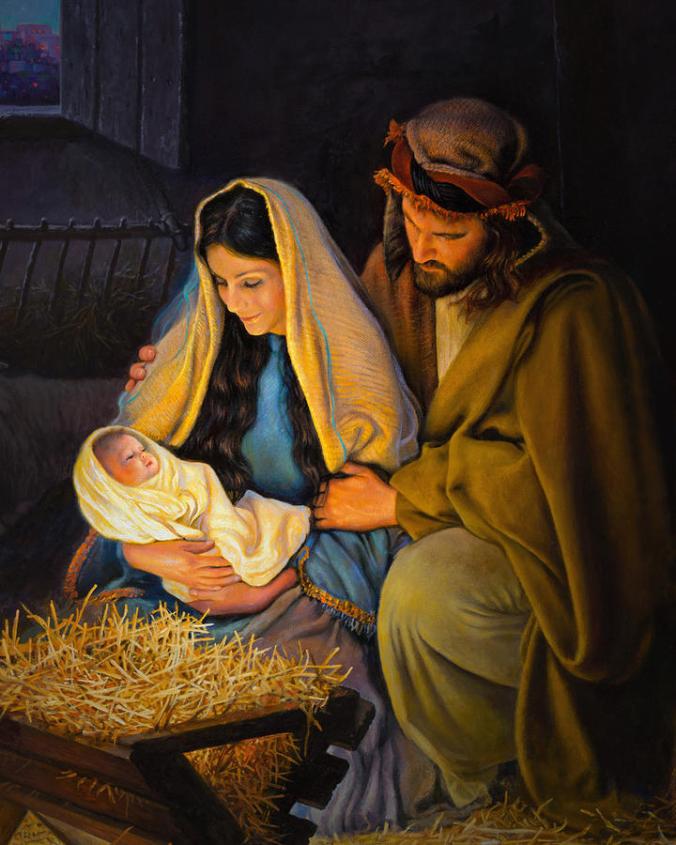
Nativity.jpg

Below is a letter I dedicated to our Lord Jesus Christ in celebration of his birth, December 25, 2020 Anno Domini.


Dear Baby Jesus,

In a stable, 2000 years ago, a seemingly ordinary infant was born. Through the inspiration of the Holy Spirit, shepherds and kings from afar learned about His incredible presence. God uses the most common of circumstances to work the greatest of all miracles–the Incarnation. God so loved the world He sent you–His only Son– to bridge the great gulf, the separation caused by sin.

Wrapped in swaddling clothes, laid in a manger, you my king took the form of mankind. I have heard the Nativity story dozens of times. This Advent I feared I would take your origin story for granted. Instead, I am grateful for the opportunity to gaze on the Nativity scene through new eyes–not merely of a follower, but also as a father.

My children are a reminder of your goodness, truth, and beauty. Seeing the twinkle in their eyes when they gaze at the Nativity Scene at home or church is priceless. The smiles on my kids faces as they color “presents” pictures for my wife and I remind me the true reason for the season!

People are born everyday on this earth, but only once a year do we remember the greatest birth of all.

Jesus my servant king, Emmanuel, Prince of Peace, God-hero, I adore you and celebrate with my family and friends the anniversary of your birth. I pray that my heart is enlarged to make room within the inn of my soul for you, my family, friends, and people I meet daily!

Praised be to God in the Highest and Alleluia for our Savior’s arrival.

With great love and gratitude,

Your adopted son,

Matthew


For us men and for our salvation

he came down from heaven,

and by the Holy Spirit was incarnate of the Virgin Mary,

and became man.

Thank you for sharing!

An 1871 Word Interview about The Scriptorium Project


Editor’s Note: Matthew Chicoine interviewed D.P. Curtin, founder of The Scriptorium Project , via email in October 2025. Some of the questions/answers have been rearranged, edited, and paraphrased to provide the best reader experience without losing any integrity of the answers given.


The Scriptorium Project seeks to make rare texts from Christian antiquity accessible for the first time in English. What inspired you to begin this work, and why is it important for the Church today?

In short: a really bad orientation group in college. My first day at Villanova involved an overly perky student orientation leader. After one too many fun facts and ice-breakers, I asked to use the bathroom. I never came back. Instead, I went to the library, where by chance I discovered the catalogue of the Jesuit Father Jacques Migne. That would prove to be providential. For the unfamiliar, Fr. Migne compiled many significant works of the Greek and Latin church into large books called “Patrologias” during the 19th century. They were massive works, but they obviously struggle with being relevant now as the use of Greek and Latin has fallen out of favor.

When I discovered them at Villanova, they were in bad shape. Many of the works of the Scriptorium Project are drawn from Migne’s collected texts. In terms of their importance to the modern church, you might say that the Scriptorium Project is a primary source movement. Rather than relying on commentary or later works about saints and church councils, these are the original texts themselves, laid bare in English so that everyone has access to them. 

Continue reading
Thank you for sharing!

Why Saint Luke is Awesome: History + Theology

The Historian of the Heart

Last October, I missed celebrating the Feast of Saint Luke. It wasn’t intentional; life just got busy. Between teaching, family life, and parish commitments, October 18th quietly slipped past. But ever since then, I’ve felt an unmistakable pull to know this Gospel writer more deeply, not just as the “beloved physician,” but as the evangelist of mercy, faith, and ordered reason.

As someone with a background in history, I’ve always admired Luke’s approach to truth. His Gospel begins not with poetry or mystery, but with method: an introduction that reads like a historian’s preface. “Since many have undertaken to compile a narrative… I too have decided, after investigating everything accurately anew, to write it down in an orderly sequence for you, most excellent Theophilus…” (Luke 1:1–3). He’s transparent about his sources and his purpose so that we may “realize the certainty” of our faith.

There’s something deeply comforting in that. Luke reminds us that Christianity isn’t a myth or an emotional movement; it’s a faith rooted in reality, built on eyewitnesses and examined testimony. Saint John Paul II beautifully captured this when he wrote that Luke “leads us to knowledge of the discreet yet penetrating light that radiates from the Word.” Luke gives us not just the facts of salvation history but the warmth of faith that makes those facts alive.

Continue reading
Thank you for sharing!

How the SOAP Method Can Equip Christians to Stay Consistently Rooted in God’s Word

Guest post by: Harry from Biblejar

For years, I struggled to stay consistent in my Bible reading. I would start strong with a new plan, only to find myself falling behind after a few weeks. Life’s busyness, distractions, and even feelings of discouragement often got in the way. I wanted to stay grounded in Scripture, but I lacked a clear method to help me stay focused and engaged.

That was when I came across the SOAP Method. Simple in design but powerful in practice, this approach helped me slow down, reflect more deeply, and stay rooted in God’s Word day after day. Whether you are new to Bible study or looking for a way to refresh your devotional time, the SOAP Bible Study Method can provide structure and depth that keeps you connected to God.

SOAP stands for Scripture, Observation, Application, and Prayer. Let’s explore how each step works and why it can transform your time in the Word.

1. Starting With Scripture

Consistency in Bible study begins with Scripture itself. The first step of the SOAP method encourages us to choose a verse or passage and write it down word for word. Slowing down to copy Scripture is more than a writing exercise; it helps the words sink deeply into our hearts and minds. For example, writing “The Lord is my shepherd; I shall not want” (Psalm 23:1, RSV) makes the verse personal. It shifts from something read quickly in a devotional to a truth that actively shapes our perspective.

Writing Scripture also trains focus. Instead of rushing through reading plans or skimming chapters, believers pause and reflect. They begin to notice details they might otherwise miss—the verbs, the promises, and the repeated ideas that underscore God’s character. For many, this simple act of writing marks the difference between reading passively and engaging actively. When Scripture becomes something we handle physically, it becomes something we internalize spiritually, forming a foundation for the rest of the SOAP process.

2. Observation: Seeing What God Is Saying

Once a passage is written, the next step is observation. This involves asking, “What is God communicating here?” Observation encourages careful attention to details, repetition, and overarching themes. It is an invitation to look beyond the surface and uncover spiritual insights.

For instance, consider Jesus’ words in John 15:4, “Abide in me, and I in you. As the branch cannot bear fruit by itself, unless it abides in the vine, neither can you, unless you abide in me” (RSV). Reading slowly and noticing the repeated word “abide” highlights the importance of continual reliance on Him. Even familiar verses can reveal new meaning when observed carefully, giving believers a fresh perspective on everyday challenges.

Observation is also a reminder that Bible study is active, not passive. It’s about asking questions, noting patterns, and thinking deeply about the implications. This practice helps Scripture move from abstract words to practical, lived truth, preparing the heart for applying these lessons in daily life.

3. Application: Living Out the Word

Observation naturally leads to application, the step where Scripture meets daily life. Application asks believers to consider how a passage informs their thoughts, decisions, or behaviors. It connects the timeless truth of God’s Word with present-day circumstances.

For example, Philippians 4:6–7 says, “Do not be anxious about anything, but in everything by prayer and supplication with thanksgiving let your requests be made known to God; and the peace of God, which surpasses all understanding, will guard your hearts and minds in Christ Jesus” (RSV). Recognizing this verse can transform a stressful day into a moment of trust and prayer. When challenges arise, the believer has a tangible Scripture to recall, helping them act according to God’s guidance rather than reacting impulsively.

Application turns knowledge into practice. By reflecting on how a verse addresses specific struggles—whether anxiety, decisions at work, or relationships—believers integrate Scripture into everyday life. Over time, this builds a habit of responding to life through a biblical lens, deepening both faith and obedience.

4. Prayer: Turning Insights Into Conversation

The final step of SOAP is prayer, where observation and application become dialogue with God. Prayer takes the insights gained from Scripture and turns them into a personal conversation. It is an opportunity to express gratitude, confess shortcomings, ask for guidance, or seek wisdom.

Through prayer, the Word becomes relational rather than merely informational. James 1:5 reminds us, “If any of you lacks wisdom, let him ask God, who gives to all generously and without reproach, and it will be given him” (RSV). As we pray about what we’ve learned, we rely on God to apply His truth in our lives. Prayer keeps believers anchored, preventing study from becoming an intellectual exercise detached from personal faith.

Daily prayer through SOAP reinforces consistency. Each morning or evening, brief but intentional time spent in reflection and conversation with God nurtures a deeper relationship. It reminds believers that Scripture is living and active, capable of shaping hearts, thoughts, and actions when approached with openness and dependence on Him.

Reaping the Fruit of Consistency

Praying with the Bible

The beauty of the SOAP method is not just in one session but in the long-term consistency it builds. Over time, the simple rhythm of Scripture, Observation, Application, and Prayer creates a daily habit of meeting with God.

I can personally testify to how this method deepened my faith. Instead of feeling guilty for skipping Bible study or rushing through chapters, I found joy in slowing down and letting God’s Word speak to me. My mornings became more peaceful, my decisions more grounded, and my heart more anchored in God’s truth.

This consistency doesn’t happen overnight, but the SOAP method makes it attainable. Just one passage, a notebook, and a few quiet minutes each day can change your walk with God.

I encourage readers to give the SOAP Bible Study Method a try and see how it transforms your time with God. Start with just one verse today, write it down, observe it, apply it, and pray it back. Over time, Scripture will become a living guide shaping your heart and actions.
Thank you for sharing!

The Legacy Continues: Pope Leo XIV and the Echoes of Leo XIII’s Teachings

In the storied halls of the Vatican, a new chapter in the Catholic Church’s history began on May 8, 2025. On this historic day, the College of Cardinals elected Cardinal Robert Francis Prevost as Pope Leo XIV—the first pope from the United States. His selection of the name “Leo” draws an intentional connection to the papal legacy of Leo XIII, whose influential encyclicals continue to shape Catholic social teaching more than a century later.

A New Leo 🦁 for Modern Times

Standing before the faithful in St. Peter’s Square, Pope Leo XIV carried himself with quiet confidence. He blessed the gathered crowd, saying, “Peace be with you all!” in fluent Italian.
His traditional papal garments hinted at a subtle shift in presentation. Yet he still conveyed the warmth and accessibility of recent pontificates.

Born in Chicago on September 14, 1955, Pope Leo XIV brings a unique background to the papacy. His journey to the Chair of St. Peter included extensive experience in both North and South America, combining academic credentials with pastoral work across multiple continents. As an Augustinian with a doctorate in canon law from Rome’s Pontifical College of St. Thomas Aquinas, he represents the global nature of today’s Church while maintaining deep connections to traditional Catholic scholarship.

The new pontiff’s first homily, delivered in the Sistine Chapel on May 9, revealed his theological priorities and pastoral vision. “You are the Christ, the Son of the living God,” he quoted from Peter’s profession of faith, emphasizing the centrality of Christ in the Church’s mission. He spoke of the Church as “a city set on a hill, an ark of salvation sailing through the waters of history and a beacon that illumines the dark nights of this world.”

Leo XIII: The Social Teaching Pioneer

Pope Leo XIII

The name selection carries particular significance due to the enduring impact of Pope Leo XIII, who served as pontiff from 1878 to 1903. Leo XIII authored the groundbreaking encyclical “Rerum Novarum” (Of New Things) in 1891. This landmark document established the foundation for modern Catholic social teaching.

Written during the Industrial Revolution, “Rerum Novarum” addressed the conditions of workers and the proper relationship between labor, capital, the Church, and the state. Its principles on human dignity, workers’ rights, and economic justice continue to resonate in contemporary discussions about social equity and economic policy.

Leo XIII emphasized the inherent dignity of every human being. He wrote, “Every man has by nature the right to possess property of his own.” He supported just wages and dignified working conditions.
At the same time, he warned against unfettered capitalism and socialism. He articulated the principle of subsidiarity: issues should be handled by the smallest competent authority.
This principle remains central to Catholic political thought.

Connecting Two Eras

What connects these two pontiffs across more than a century is their focus on applying timeless Catholic teachings to contemporary challenges. While Leo XIII confronted the social upheaval of industrialization, Leo XIV faces a world transformed by digital technology, ecological concerns, and profound questions about human identity.

In his previous role as Prefect of the Dicastery for Bishops, Cardinal Prevost emphasized that bishops must “communicate the beauty of the faith, the beauty and joy of knowing Jesus.” This sentiment echoes Leo XIII’s conviction that true social progress must be rooted in Christian life and institutions: “And if human society is to be healed now, in no other way can it be healed save by a return to Christian life and Christian institutions” (Rerum Novarum #27).

The new pope acknowledges the contemporary context where faith is often dismissed as “absurd, meant for the weak and unintelligent.” “His call for “missionary outreach” addresses places where believers face mockery, opposition, and contempt. The new pope specifically mentions contexts where the faithful are “at best tolerated and pitied.” This approach suggests a pontificate that will actively engage with secular culture rather than retreat from it.”

The Role of the Papacy

Jesus gives the keys of authority on faith and morality to Saint Peter (and his successors).

As the 267th successor to St. Peter, Pope Leo XIV inherits a unique role in global Christianity. The Catechism of the Catholic Church describes the papacy as “the perpetual and visible principle of unity in faith and communion in the Church.” This understanding of papal primacy dates back to Matthew’s Gospel, where Jesus tells Peter, “You are Peter, and on this rock I will build my church” (Matthew 16:18).

Through centuries of political upheaval, theological disputes, and cultural transformation, the papacy has provided continuity and stability for Catholic teaching. While adapting to changing circumstances, successive popes have maintained core doctrinal positions while developing the Church’s understanding of their application.

The papacy today functions not only as the spiritual leadership of 1.3 billion Catholics worldwide but also as a significant voice in international diplomacy and humanitarian concerns. Pope Leo XIV’s background in both North and South America positions him uniquely to address global challenges with a perspective informed by experience in both developed and developing regions.

Looking Forward

In his first homily, Pope Leo XIV spoke of the need to “move aside so that Christ may remain, to make oneself small so that he may be known and glorified.” This humility suggests a pontificate focused more on witnessing to Christ than on the personality of the pope himself.

His emphasis on the Church’s missionary character indicates that evangelization will be a priority, continuing the “New Evangelization” initiative championed by his predecessors. At the same time, his invocation of the Church as “an ark of salvation” suggests a commitment to preserving traditional Catholic teaching in an increasingly secular world.

As Pope Leo XIV begins his pontificate, Catholics worldwide look to him as both a guardian of tradition and a guide for applying that tradition to contemporary challenges. His connection to Leo XIII through his chosen papal name invites reflection on how Catholic social teaching can address today’s social questions with the same moral clarity that Leo XIII brought to the industrial era.

In a world facing political polarization, technological disruption, and ecological concerns, how effectively Pope Leo XIV communicates ancient wisdom to modern ears may well define his papacy. Through this communication, he continues the legacy of Leo XIII while writing a new chapter in the ongoing story of the Catholic Church.

Related Resources

Pope Leo XIII’s Rerum Novarum (1891) – Vatican.va

Compendium of the Social Doctrine of the Church – Pontifical Council for Justice and Peace

Leo XIV is the new Pope – Vatican News

How Tetherball is Like the Catholic Church – The Simple Catholic

Thank you for sharing!

Why Christian Anthropology is the Key to Modern Identity Crisis


Sponsored: This article is made possible by Image & Gift Ministries LLC, supporting quality and engaging Catholic content.


In a world where identity has become increasingly fragmented and fluid, what if the most profound answers about who we truly are have been waiting for us since the beginning of creation? The modern man has an identity crisis and the solution is Christian anthropology. This might sound like advanced terminology, leaving you wondering: what does this actually mean?

In simplest terms, Christian anthropology is understanding human persons as God created them. Ultimately what is at stake is human identity. As our culture moves farther away from the true understanding of the nature and purpose of the human person, the need for education in Christian anthropology is more necessary than ever before in our experience.

The Christian understanding of the human person was once taken for granted in our culture as the standard by which all understood themselves and others. Today this is not the case. We see evidence of identity confusion all around us or even within ourselves. Just do a Google search of “define identity” and one can see the confusion that surrounds the idea.

The Fundamental Questions of Human Existence

Christian anthropology seeks to answer the deepest and most universal questions every person must wrestle with in some seasons of our lives: Who/what am I? What is my purpose? What is the point of my existence? Why are humans embodied? Are humans really created only male and female? What is the relationship between the body and soul?

Saint John Paul II begins his meditation on the Christian understanding of the human person by referring to the beginning. From this perspective he paints an amazing picture of what God intended for humans when He created them.

In his fifth speech of Theology of the Body, which he subtitled, “Man in Search of His Essence,”1 Saint John Paul II, regarding the creation of man, says, “…man is the object of the creative action of God-Yahweh, who at the same time, as Legislator, sets the conditions for the first covenant with man.”

Three Foundational Truths About Human Nature

In this one half-sentence Saint John Paul II articulates three foundational truths about the nature of the human person from the Christian perspective. Imagine it, God breathes His Spirit into the nostrils of the creature, which scripture says is the moment, “the man became a living being” (Gen. 2:7) and as he comes into consciousness for the first time, he finds himself in relationship with his Creator. This is the first foundational and most important aspect Christian anthropology teaches us about human nature. To be the “object of the creative action of God,” is to say God created the human person. God is the creator. We are creatures. We do not create ourselves. Our nature, our humanity, our existence is a gift from a Creator who gave His own breath to give us life. This is the foundation of our humanity.

In this same sentence, Saint John Paul II uses a capital “L” for the word “Legislator.” Why? Or, a better question is, “who”? Obviously, he is referring to the Father – but, why “Legislator”? Identifying the Father in this way introduces the second foundational truth about the nature of the human person namely, God is the one who makes the rules. Humans do not decide for themselves what is good or evil. That’s the Creator’s job.

The Covenant Relationship with God

The third foundational truth of human nature as God reveals it and Saint John Paul II articulates it, is revealed by the word, “covenant.” The human person enters a unique relationship with God the Father and Creator. This relationship differs from a common contract that either party can dissolve at any time. A covenant is meant to be permanent. It is entering into a relationship, a communion of persons. Contracts are about things or services the parties will exchange. Covenant is about persons, contracts are about things. What does this tell us about the nature of the human person? We are not things to God. We are persons who are set into a relationship of communion with God.

These three foundational characteristics of human nature or identity is just the beginning of what the Christian anthropology Saint John Paul II articulates in Theology of the Body. Imagine how much more there is to say about human nature if we can understand all that in just one half-sentence from Theology of the Body!


Thanks again to today’s article sponsor! Visit Image & Gift Ministries LLC to learn more about Christian anthropology rooted in the Theology of the Body. 


Thank you for sharing!

Why Sacred Art is Needed More than Ever


Editor’s note: Article originally published on August 22, 2019. This article is sponsored by Holyart.com.


Our world is an ugly place. Disease, cancer, war, hunger, greed, murder, abuse, and countless other appalling things have existed throughout human history. Because of the original sin of Adam and Eve, humanity fell out of communion with God. Thankfully, God had a plan. A redemptive plan of salvation. Through the Suffering, Death, and Resurrection of Jesus Christ, God provided a pathway for us to return to Him. Two thousand years later, not much has changed with humanity. Human nature is always the same. Self-centered. Jesus sent the Holy Spirit to guide the Catholic Church as a harbor and teacher of truth.

Catholic Church

Baptized Christians are called to a life of grace. This is best lived out by participation in the Sacraments. Life on earth is temporary. Our true home is Heaven. St. Therese of Liseux said it best, “The world’s thy ship and not thy home.” Nothing is wrong with admiring the beauty this world has to offer. It only becomes an issue when the good of the created world is preferred to the good of God.

Beauty and Goodness

According to Bishop Robert Barron, “Begin with the beautiful, which leads you to the good, which leads you to the truth.” His quote always intrigues me. Think of the things you consider to be beautiful. Things that immediately come to mind are the beauty of a sunset, a smile, or the kindness of a stranger. Those are truly beautiful things or actions. Beauty always points us to the good.

beauty truth goodness quote

Saint Pope John Paul II described the relationship between goodness and beauty in this way, “beauty is the visible form of the good” (Letter of His Holiness Pope John Paul II to Artists, 1999, no. 3). Throughout Church history, holy art in the form of icons, sculptures, and architecture has reminded Christians (and the world) of the Good News of Jesus Christ. In this article, I will provide three reasons why sacred art is desperately needed to help us recover a sense of beauty in an ugly world.

Inspiration Not Mere Entertainment

A major difference between modern art and sacred art is their purpose. The former seeks to entertain whereas the latter aims at a higher purpose—inspiration of the heart, mind, and soul. In his 1999 Letter to Artists, John Paul II describes the motivation of artists as, “they must labor without allowing themselves to be driven by the search for empty glory or the craving for cheap popularity, and still less by the calculation of some possible profit for themselves. There is therefore an ethic, even a ‘spirituality’ of artistic service, which contributes in its way to the life and renewal of a people” (no. 4). Holy art seeks to serve others and the Other—(God). Gazing at those holy individuals will help inspire you to lead a holier and virtuous life.

Drawing us into the Paschal Mystery

Sacred art draws us into the life of Jesus. “Thanks also to the help of artists ‘the knowledge of God can be better revealed, and the preaching of the Gospel can become clearer to the human mind’”, declared St. John Paul II (Letter of His Holiness Pope John Paul II to Artists, 1999, no. 11). Sacred art largely consists of scenes from the Gospels. Entering any Catholic cathedral or basilica causes an immediate reaction of wonder and awe. We gaze at the glorious murals, statues, and music that exist.

trinity icon sacred art

In college, I went on a trip to Europe. My favorite part was visiting the glorious cathedrals in Rome and France. I experienced the tangibility of the Gospels during those church tours. The marble statues of Christ and the Apostles transported me into the New Testament. According to the Catechism of the Catholic Church, the primary subject matter of sacred art is Jesus, Mary, the saints, and scenes from the Gospel (CCC 2502). Sacred art helps draw our minds deeper into the Mysteries of our Faith.

Sacred Art Navigates the Soul Toward Heaven

Along with inspiring and drawing us closer to the Good News of the Gospel, sacred art helps to remind us that our ultimate destination is not here on earth, but in Heaven with God. Pope Emeritus Benedict XVI wrote in his August 31st, 2011 General Audience, “Art is able to manifest and make visible the human need to surpass the visible, it expresses the thirst and the quest for the infinite.” Holy art acts as a doorway to the supernatural.

doorway to the divine

Sacred art is not the end, but rather a vehicle to help us pray. The Catechism of the Catholic Church paragraph 1192 teaches, “Sacred images in our churches and homes are intended to awaken and nourish our faith in the mystery of Christ. Through the icon of Christ and his works of salvation, it is he whom we adore. Through sacred images of the holy Mother of God, of the angels and of the saints, we venerate the persons represented.”

The statue of the Blessed Virgin Mary in my dining room reminds me of her closeness to her Son Jesus. Gazing at images of saints also help guide me closer to Christ and ponder the reality of Heaven—full love and communion with God!

Sacred art is vital to a renewal of the increasing de-Christianization of nations and cultures around the world. Bring back beauty into an ugly world by owning holy art in your home and workplace. Be an advocate for change and promote the Gospel while adding beauty to your surroundings.


Visit Holyart.com for high quality and original Catholic artwork for your home, parish, or business.


Related Links

Sacred Art is the Triumph of Beauty and Truth

The Importance of Sacred Art

3 Reasons Catholics Should Have a Saint Statue at Home

Thank you for sharing!