Saint Hildegard of Bingen: Finding Joy and Courage in a Shipwrecked World

September 17 is one of the most meaningful feast days of the year for me.

First, it is my daughter’s birthday. It is also the feast of Saint Lambert, the patron saint of marriage and the patron of the parish where my family regularly attends Mass. The Church also remembers Saint Robert Bellarmine, one of my favorite saints of the Counter-Reformation.

As if that were not enough, September 17 is the feast of Saint Hildegard of Bingen.

Hildegard is difficult to summarize in a single sentence. She was a Benedictine nun, abbess, mystic, theologian, composer, writer, herbalist, and student of the natural world. Calling her a polymath might be the most concise description. A polymath is someone with expertise in many different fields, and few saints fit that description better than Hildegard.

Yet her many accomplishments did not come from a scattered mind chasing every interesting subject. Her work flowed from one source: her love for God. Faith united her interests in Scripture, music, medicine, nature, and the human person.

A Mystic Rooted in Christ

Born in Germany in 1098, Hildegard was dedicated to God from childhood. She entered the Benedictine community at Disibodenberg under the guidance of Jutta of Spanheim. After Jutta died in 1136, Hildegard became the leader of the religious community. She later established monasteries at Rupertsberg, near Bingen, and Eibingen.

Hildegard experienced visions from a young age. She did not describe them as dreams or moments when she lost awareness of her surroundings. Instead, she remained conscious and understood them as a form of spiritual perception.

When Hildegard was about forty-two, she believed God commanded her to record and communicate what she had seen. She initially hesitated. The responsibility frightened her, but with the assistance of secretaries and the encouragement of Church authorities, she began writing.

Her principal visionary works included Scivias, The Book of the Merits of Life, and The Book of Divine Works. These writings explored the Incarnation, creation, virtue and vice, and humanity’s need to return to God.

Although Hildegard’s visions attract attention, they should not distract us from the foundation of her spirituality. Her thought was deeply rooted in Christ, Scripture, the liturgy, the Church Fathers, and the Rule of Saint Benedict. Pope Benedict XVI observed that her writings possessed a profound unity centered on Christ.

Hildegard did not pursue unusual spiritual experiences for their own sake. Her visions directed people toward repentance, holiness, and a deeper relationship with Jesus.

A Saint Who Refused to Bury Her Gifts

Hildegard’s life reminds us that contemplation does not mean ignoring the needs of the world.

She lived in a monastic community, but her influence extended far beyond its walls. She corresponded with popes, bishops, emperors, priests, religious sisters, and laypeople. Yet, she warned Church and political leaders when they wandered from the truth. And she also traveled to preach, something highly unusual for a woman in the twelfth century.

Hildegard possessed courage because she understood that her gifts did not belong to her alone. God had entrusted them to her for the good of the Church.

A line often attributed to her captures that courageous spirit:

“Even in a world that’s being shipwrecked, remain brave and strong.”

Those words feel particularly relevant today. Our society often appears shipwrecked by division, confusion, fear, and isolation. It is tempting to panic, complain, or withdraw from the world entirely.

Hildegard offers another response. Remain faithful. Remain courageous. Continue creating beauty and speaking the truth even when the culture seems to be falling apart.

Her courage did not come from confidence in her own abilities. It grew from obedience to God. Hildegard understood that the answer to a troubled world begins with the conversion of individual hearts.

The Music of Heaven in a Family Home

Saint Hildegard composed a large collection of sacred music, including the Symphonia armoniae caelestium revelationum. She also wrote Ordo virtutum, a sacred morality play about the struggle between the virtues and the devil.

For Hildegard, music was more than entertainment. It reflected the harmony of heaven and helped lift the human soul toward God. Creation itself formed a kind of symphony in which every part found its proper place in relation to its Creator.

This aspect of her life holds special significance for me. Hildegard is often invoked as a patron of musicians and writers, and I am a writer who was heavily involved in music during high school and college. My children are now following in those footsteps through band and choir.

As I worked on this article, I could hear a metronome ticking downstairs along with the notes of our electric piano. My children were putting on what they called a piano concert.

It was not quite the Symphonia of Saint Hildegard, but it was still beautiful.

Moments like that reveal how music brings order and joy into a home. Separate sounds become a melody. Different voices join in harmony. Even practice, with its missed notes and repeated measures, can gradually produce something beautiful.

The Christian life works in a similar way. God takes our different talents, personalities, and experiences and orders them toward something greater than we could produce alone.

Did Saint Hildegard Invent Pumpkin Spice?

There is a running joke in the Catholic meme world that Saint Hildegard invented pumpkin spice.

Technically, she did not. Hildegard never combined her spices with pumpkin, and the prepared blend now known as pumpkin spice did not appear until centuries after her death. McCormick introduced its commercial “Pumpkin Pie Spice” blend in 1934.

Still, the joke contains a small grain of truth. Hildegard knew a great deal about herbs, plants, food, and spices.

In her work Physica, she described a recipe using nutmeg, cinnamon, cloves, whole-wheat flour, and water. She believed these little cakes could calm bitterness, strengthen the body, open the heart, and make the soul joyful.

Today, people often call them Hildegard’s “Cookies of Joy.”

A small framed copy of one version of this recipe hangs in my kitchen. It lists nutmeg, cinnamon, and cloves as the “joy spices.” These happen to be three of the main flavors people now associate with pumpkin spice.

Hildegard’s observations should not be treated as modern medical advice. She wrote within the scientific and medical understanding of the Middle Ages. Nevertheless, her work reveals something important about how she viewed the human person. She did not separate physical health, spiritual health, and the created world into unrelated categories.

Her faith taught her to see creation as a gift. Plants, food, music, the body, and the soul all belonged within God’s wise design.

The Spiritual Greenness of God’s Grace

One of the most fascinating themes in Hildegard’s spirituality is viriditas. The Latin word is often translated as “greenness,” “freshness,” or “life-giving vitality.”

For Hildegard, viriditas described the power of God that brings life and fruitfulness to creation. The same divine grace that causes plants to grow also renews the human soul.

Sin produces the opposite effect. It dries us out. It makes us spiritually brittle, weak, and unable to bear good fruit. Grace restores the moisture of divine life to the soul.

This image calls to mind Christ’s words in John 15:5: “I am the vine, you are the branches.” A branch separated from the vine withers because it cannot generate life on its own. When we remain united to Jesus, his life flows through us and enables us to bear fruit.

Hildegard’s concern for nature was therefore not separate from her theology. She studied creation because creation revealed something about its Creator. Respecting the natural world also meant recognizing that it was neither divine nor disposable. It was a gift entrusted to humanity.

Her vision offers a helpful correction for our fragmented age. We often divide faith, work, health, beauty, science, and creativity into separate compartments. Hildegard saw them as different parts of one reality held together by God.

Becoming Fruitful in a Withering World

Saint Hildegard died on September 17, 1179. More than eight centuries later, Pope Benedict XVI formally extended her liturgical veneration to the universal Church. On October 7, 2012, he proclaimed her a Doctor of the Church, making her the fourth woman to receive that title at the time.

Her life demonstrates why the Church continues to learn from her.

Hildegard was brilliant, but intelligence alone did not make her a saint. She placed her intellect at the service of God. She wrote, composed, studied, taught, healed, advised, and corrected others because she wanted Christ to renew his Church.

Most of us will never compose a medieval sacred drama, correspond with an emperor, or write an encyclopedia of medicinal plants. But God has entrusted each of us with particular gifts.

Perhaps you write. Perhaps you sing or play an instrument. Maybe you teach, garden, cook, raise children, study science, care for the sick, or encourage people who feel spiritually dry.

Holiness does not require us to become skilled at everything Hildegard accomplished. It requires us to offer God whatever gifts we have received.

Her life reminds us that a person rooted in prayer can produce astonishing fruit. Even in a shipwrecked world, God continues to make saints. Even when the soul feels withered, his grace can make it green again.

Saint Hildegard of Bingen, pray for us. Help us remain brave and strong. Teach us to recognize God’s wisdom in creation, use our gifts for the good of others, and allow Christ to renew our hearts.


“Glance at the sun. See the moon and the stars. Gaze at the beauty of earth’s greenings. Now think — what delight God gives to humankind with all these things.” — Saint Hildegard of Bingen

Related Links 

Women Doctors of the Church: Hildegard of Bingen

Apostolic Letter Proclaiming Hildegard of Bingen Doctor of the Church

What Is Viriditas? Hildegard’s Greening Power Explained

Thank you for sharing!

Saint Anthony of Padua: More Than a Finder of Lost Things

Every June 13, Catholics around the world celebrate the feast of Saint Anthony of Padua. For most, he’s the quick miracle worker who helps recover misplaced keys, lost wallets, or that library book you swear you just had. But Saint Anthony was much more than a “patron saint of lost things.” He was a preacher, a teacher, a scholar, and a spiritual guide whose life still points us toward Christ today.

I have a personal connection with Anthony that goes beyond anecdotes. My oldest son shares his birthday with Anthony’s feast day, which somehow makes the saint feel like a family friend. Growing up with ADHD, I’ve had my fair share of forgotten items, most memorably my car keys during a summer music camp away from home. Thanks to Saint Anthony, they were found, though it involved my mom driving up to unlock the car. Moments like that, small and practical, are reminders of the saint’s intercession, but they also hint at a deeper truth: Anthony helps us find what is lost, both in the tangible and spiritual sense.

Born Fernando in Lisbon around 1195, he grew up in a noble family and was initially part of the Augustinian canons. He studied Scripture and the Church Fathers, preparing for the life of preaching and teaching that would later define him. Around 1220, Fernando encountered the memory of early Franciscan martyrs who had gone to Morocco to witness the Gospel, even risking death. Inspired, he left the Augustinians, joined the Friars Minor, and took the name Anthony. Though his missionary plans were curtailed by illness, he embraced the Franciscan way with zeal, eventually becoming Provincial Superior in northern Italy, preaching tirelessly, and guiding his fellow friars until his death near Padua in 1231.

Continue reading →
Thank you for sharing!

5 Stunning Facts about Saint Catherine of Siena


Sponsored: This article is made possible by Letters From Heaven — Saint Letters for Catholic Kids supporting quality and engaging Catholic content.


Saint Catherine of Siena was one of the greatest followers of Christ. Her ability to articulate the Gospel and her courage to call even the papacy to reform are among the key reasons she is one of my favorite saints. My youngest daughter is even named after this amazing saint, which means her story shows up often in our home in very real and tangible ways.

Read on to learn five amazing facts about Catherine:

Continue reading →
Thank you for sharing!

Saint Bonaventure’s Good Venture to Know God


Editor’s Note: Post originally published on February 23, 2023.


God works in mysterious ways. I truly believe he puts you in specific situations at precise times to allow you to grow in trust and faith in Him. As members of the Church Militant, we are called to be in communion with the saints in Heaven—the Church triumphant. Over the course of the past several months, I believe God called me to learn more about Saint Bonaventure. Having a background in theology, my inclination towards the Seraphic Doctor of the Church makes sense.

Saint Bonaventure

Rarely, does God act in such a plain or shallow sense. Along with being elevated to the status of Doctor of the Catholic Church, St. Bonaventure is also the patron saint of something quite ordinary, yet awkward at the same time—bowel movements. As a young child Bonaventure had a life-threatening sickness affecting his bowels. This sickness almost took his life. The intercession of St. Francis of Assisi cured him. Because of this, the Catholic Church recognized Bonaventure as the patron saint of individuals suffering similar illnesses.

My youngest son struggles with digestive and bowel issues. During a particularly rough evening, my wife and I prayed to St. Bonaventure, as we tried everything else medically to help our son. Our pleas for help to the 13th century saint forged the beginning of what I hope to be a lifelong friendship.

While St Bonaventure wrote on various subjects this article will solely focus on arguably his greatest work—The Journey of the Mind into God. Pope Emeritus Benedict XVI in St. Bonaventure: Literary Work and Doctrine calls this work, “a manual for mystical contemplation.” Providentially, Bonaventure pondered this work at the same place whereby St. Francis of Assisi received the stigmata—Mount La Verna in Italy!

Stepping up the Ladder of Learning

Ladder to Heaven

As a teacher of theology, St. Bonaventure provides a gradually and steady path, specifically six steps, to grow in awareness and knowledge of God. Bonaventure puts it this way,

For through those six wings there can be rightly understood six suspensions of illumination, by which the soul as if to certain steps or journeys is disposed, to pass over to peace through ecstatic excesses of Christian wisdom.

no 3. The Journey of the Mind Into God

A prerequisite for beginning this journey is praying through Christ crucified. Jesus acts as a bridge; or, to use the imagery of Bonaventure, a ladder connecting us to the Holy Trinity.

Creation as Reflection of God

God and Creation

In Chapter 1 of The Journey of the Mind Into God, the Seraphic Doctor tells us that the first rung of the ladder to God is the created world. When we don the glasses of faith, we see nature pointing to the glory of God. Bonaventure refers to the created world as “the university of things” as a kind of stairway to climb toward God (Chapter 1 no. 2). Later in the chapter he describes the world as “a mirror through which we pass over to God. Plants, animals, mountains, oceans, the moon and stars above point to a Creator—because of the beauty and order within nature.

Bonaventure draws us up the holy ladder in his next chapter.

It must be noted that this world (the universe), which is called the macrocosm, enters our soul, which is called the microcosm, through the gates of the five senses…Man, who is called the microcosm, has five senses like five gates, through which acquaintance with all things, which are in the sensible world, enters into his soul.

(Chapter 2, no. 2)

Catholicism values the created order as not something to be jettisoned. The sacramentals utilize various forms of matter (things) because they hold intrinsic value and point had a higher order of being.

Human Mind—Mirror of the Trinity

Bonaventure brings the reader up another rung on the ladder of mystical contemplation by focusing on the natural powers of the human soul. According to the 13th century saint, the three highest faculties of humanity are memory, intellect, and will. He saws these three powers as a natural reflection of the Holy Trinity.

Holy Trinity Icon

The Seraphic Doctor plainly declares, “According to the order and origin and characteristic of these powers (the soul) leads into the Most Blessed Trinity itself!” (Chapter 3 no. 5). As a perfect spirit, Bonaventure argues, God has memory, intelligence, and will. In the remaining chapters of The Journey of the Mind Into God, Bonaventure details how grace guides the soul in knowing and growing in knowledge of God, seeing God’s unity through His being, and finally viewing God as a communion of Persons in the Holy Trinity.

I had to read this work at least three times before I could write this reflection on St. Bonaventure’s gem of a work. This is not an indictment on his ability to write clearly or my ability to discern (at least I hope not!) Instead, any and all writings on the subject of God, in particularly a Trinitarian understanding of God has to be mysterious. “When you contemplate these, see, that you do not consider yourself able to comprehend the incomprehensible (The Holy Trinity). For in these six conditions (steps) you still have to consider what leads the eye of our mind vehemently into the stupor of admiration (Chapter 6 no. 3).

Journey with Bonaventure Today

Journeying into God is not an easy task, but it will certainly end with both wonder and awe. St. Bonaventure’s closeness to the God is quite evident in this spiritual treatise. If you are a parent of young children, such as myself, perhaps you may not have time now to read this holy book. Bonaventure can still help you on your spiritual and parental journey, because at some point your kid will get severely constipated. Ask the Seraphic Doctor for help. Believe me, it arrives.

If you have more time available for spiritual reading, I strongly recommend you add The Journey of the Mind Into God to your top ten list!

Thank you for sharing!

Spiritual Surgeons—Saint Catherine of Siena


Editor’s note: Article originally published on March 28, 2019.


Healthcare has become a hot-button issue over the past several years. Is it a privilege or a natural human right? Should you vaccinate your children or allow their body’s immune system to fend off diseases naturally? Is surgery better or experimental non-evasive treatment better? The list of questions goes on and on. Because I am not a doctor, I will not be discussing healing of the body in this article. Instead, as a Catholic and student of theology, I will examine the best practices to combat spiritual sickness—sin!

According to the Catechism of the Catholic Church paragraph 1501,

Illness can lead to anguish, self-absorption, sometimes even despair and revolt against God. It can also make a person more nature, helping him discern in his life what is not essential so that he can turn toward that which is. Very often illness provokes a search for God and a return to him.

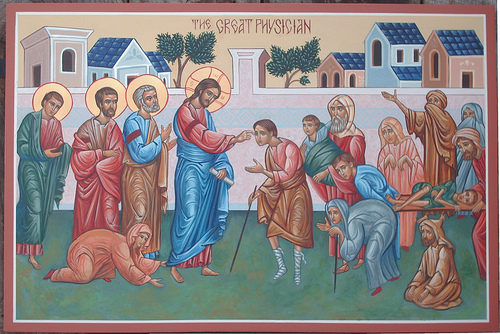
Icon of Christ the Divine Physician

The Healing Mission of Christ and the Church

A common title given to Jesus is Divine Physician because he heals humanity from sin and death. While our ultimate trust focus on God as healer of souls, He has employed various men and women over the centuries to stand as great witnesses to the truth. Such saints are called Doctors of the Church.

Not to be confused with medical doctors, Doctors of the Church are, “certain saints whose writing or preaching is outstanding for guiding the faithful in all periods of the Church’s history. To view a complete and detailed list of all saints with this honor please refer to Dr. Marcellino D’Ambrosio’s Doctors of the Catholic Church—Complete List.

Working for God

Saints Work for the Divine Doctor

Because of the incredible need for healing and hope in this fallen world, today will mark the beginning of a weekly blog series Spiritual Surgeons —Co-workers with the Divine Physician. Every week we will focus on a different saint. We will examine key themes and advice from their writings to help us root out sin and grow in our relationship with God and neighbor. St. Catherine of Siena will be the focus of this inaugural Spiritual Surgeons installment.

Corruption of Sin

Catherine lived in the 14th century during a period of grave clergy corruption. She famously wrote to Pope Gregory XI urging him to return to Rome and clean up the abuses going on within the Catholic Church hierarchy. At that time, the papacy succumbed to the powers of the world (France) and the pope lived in Avignon to appease the French rulers. Catherine petitioned to the pope by declaring, “But, I hope, by the goodness of God that you will pay more heed to His honour and the safety of your own flock than to yourself, like a good shepherd, who ought to lay down his life for his sheep” (Letter to Gregory XI). Her brave and consistent witness to the Truth even against those in power brings us hope.

Cleansing fire

Furnace of Divine Love  

Along with Catherine’s teaching on the corruption of sin, she teaches sin decays the soul. Similar to how disease infects the body, so too, sin infects the soul. Physical surgery involves pain. Both in the actual procedure and the healing process afterwards. Spiritual surgery necessarily contains suffering as well. St. Catherine’s remedy includes the fire of God’s love.

Catherine warns against non-evasive spiritual treatments in fighting sin. According the Sienese saint in a letter to Pope Gregory XI, “If a wound when necessary is not cauterized or cut out with steel, but simply covered with ointment, not only does it fail to heal, but it infects everything, and many a time death follows from it.”  Her advice matches what Jesus taught on the Sermon of the Mount. In Matthew 5:29-30,

If your right eye causes you to sin, tear it out and throw it away.s It is better for you to lose one of your members than to have your whole body thrown into Gehenna. And if your right hand causes you to sin, cut it off and throw it away. It is better for you to lose one of your members than to have your whole body go to Gehenna.

Purification by Flames

Fire acts as a destructive or purifying agent. Catherine speaks of God’s love as a fire cleansing the soul from sin. The word fire occurs 94 times in The Dialogues of St. Catherine. Phrases such as fire of Divine love and fire of Divine charity occur 5 and 3 times respectively. Although the first man muddied himself with the disobedience of sin, Catherine reminds us that God became man to show us the path of salvation. She wrote in her Dialogues, 

So that each man has in his own person that very same key which the Word had, and if a man does not unlock in the light of faith, and with the hand of love the gate of heaven by means of this key, he never will enter there, in spite of its having been opened by the Word; for though I created you without yourselves, I will not save you without yourselves…My only-begotten Son, the Word, come and taken this key of obedience in His hands and purified it in the fire of divine love, having drawn it out of the mud, and cleansed it with His blood, and straightened it with the knife of justice, and hammered your iniquities into shape on the anvil of His own body.

Catherine of Siena

Catherine of Siena lived a profoundly holy life of faith. Her ability to correct clerical abuses with charity was second to none. According to St. Pope John Paul II in his Apostolic Letter Three Co-patronesses of Europe, “Catherine addressed churchmen of every rank, demanding of them the most exacting integrity in their personal lives and their pastoral ministry. The uninhibited, powerful and incisive tone in which she admonished priests, Bishops and Cardinals is quite striking.” Learning from this great Doctor of the Church not only deepened my knowledge about God but strengthened my personal relationship with God.

Related Links

Catherine of Siena—Pious Paladin for Today’s Current Clergy Corruption

Doctors of the Church— Definition and Complete List

Thank you for sharing!