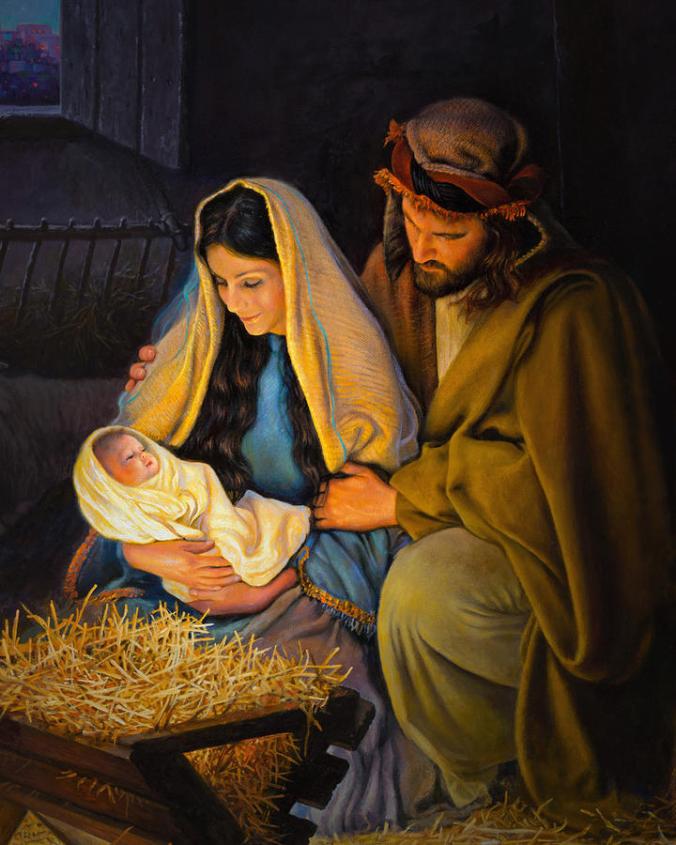
3 Ways the Holy Family will Help Your Family

Holy Family

According to St. John Paul II, “As the family goes, so goes the nation and so goes the whole world in which we live.” Families are a microcosm of society. The breakdown of the family unit is the greatest tragedy of our lifetime.

Living with other people is challenging.

Raising children is a full-time job. It’s an underappreciated and exhausting job. There is no parent manual. Too many unique circumstances exist for a clear-cut black and white rulebook. Right?!

While the details of parenthood can be debatable, there is a blueprint to raising a family with grace and love. This model is found by examining the Holy Family! Jesus. Mary. Joseph.

An analysis of Scripture and Traditional Catholic teaching will show us that the Holy Family’s love, obedience to God’s will, humility, and patience give you an example of how to foster meaningful and lasting relationships with your friends, spouses, children, and neighbors.

Model for the Family

In his Angelus on December 31st, 2006, Pope Emeritus Benedict XVI declared, “The Holy Family of Nazareth is truly the “prototype” of every Christian family which, united in the Sacrament of Marriage and nourished by the Word and the Eucharist, is called to carry out the wonderful vocation and mission of being the living cell not only of society but also of the Church, a sign and instrument of unity for the entire human race.

Jesus displayed obedience to his parents. This truth is shown in the tradition of the Catholic Church. The opening Antiphon in the Divine Office for the Feast of the Holy Family is “Come let us worship Christ, the Son of God, who was obedient to Joseph and Mary.” Simple yet profound!

Imagine being God and still able to submit yourself to the authority of your father and mother.

Silence leads to sanctity

Guess how many words of St. Joseph did the Evangelists record in the Gospels? If you guessed a whopping ZERO then you are correct my friend! Though included in the key infancy and adolescent scenes of Jesus’ life the foster father of our Lord said nothing!

St. Joseph quote meme

The adage “actions speaks louder than words” applies more directly to St. Joseph than arguably any other person in history– as we can only analyze his actions. Cardinal Robert Sarah in The Power of Silence: Against the Dictatorship of Noise plainly stated, “Man must make a choice: God or nothing, silence or noise.” Using Sarah’s logic Joseph not only clearly, but overwhelmingly chose God!

Joseph’s ability to heed the Angel’s message to flee the wrath of King Herod demonstrates a complete trust and dependence on God. The noise of life yanks me in different directions– all away from God. Looking to the silent saint as a role model helps to remind me of the importance of asking the Lord for help.

St. Joseph provides the ideal for what it means to be a kind and loving father and man. More than ever this world needs strong men to be role models for their families and communities.

Humility overcomes Hubris

humility over pride

According to St. Louis de Montfort, “The Son of God became man for our salvation but only in Mary and through Mary.” Mary is honored because of her humility and obedience to the will of God. Her YES to God’s plan was the pathway by which Jesus entered our world.

Like St. Joseph, Mary’s trust in God was evident in her obedience, despite the unique circumstances the Holy Family was in.

Conclusion

Due to Original Sin, humanity suffers a fractured relationship with God. The Mystery of the Incarnation involved God becoming man in the Person of Jesus Christ. Divine Love selected Joseph of Nazareth to be the legal and foster father of Jesus Christ and protector of Mary. Mary was chosen to be the mother of the Son of God.

St. John Paul II closed his Apostolic Exhortation Familiaris Consortio by saying, “I entrust each family to Him, to Mary, and to Joseph.”

May all men reflect upon the silent, humble, and diligent example of the Holy Family. And may the Holy Spirit grant us opportunities to be holier versions of ourselves!

Related Resources

An Advent Reflection on Finding Gratitude in the Stressful Season

3 Titles of Mary that Give Me Hope

https://thesimplecatholic.blog/2019/12/25/a-birthday-letter-to-the-infant-son-of-god/

Thank you for sharing!

Christmas D̶a̶y̶ Season— Experience the Joy of the Incarnation

Secular society hits us with commercialization of Christmas and makes the world weary after December 25th.

The day after the celebration is often spent returning gifts to stores.

Where is the joy in that act?

Shouldn’t we spend the days after the birth of our Savior still reveling in awe of the Incarnation (God becoming man when truly reflected upon brings one to tears, I was leaking joy from my eyes earlier this week).

But Christmas is not a day it’s actually a season.

Jesus saved us from sin and day. The very least we can do is to leave up our Christmas tree for the 12 days of Christmas.

How do you celebrate Christmas as a season?

🎄⭐✝️❤️🙏

Thank you for sharing!

Why the Holidays Don’t Have to be Perfect in 2024

💫💫💫Too often society places pressure for the perfect “holiday” season:

🔷all the gifts must be precisely wrapped and laden under the Christmas tree in a tidy order,

🔷the Christmas meal has to be cooked to the exact temperature and paired with the appropriate side dishes depending on the main dish,

🔷 family members need to behave–especially your “estranged/weird” uncle [or aunt or other unique relative you may have].

The Perfection Pitfall

⚜️Honestly, I fall into this fallacy almost every year myself.

⚜️This year was no different. Stomach flu, toddler tantrums, and lack of sleep dominated the weeks leading up to my Advent.

⚜️I struggled at times to see the purpose in the pain. Going to Sunday Mass helped reorient me back to the right path.

Reason for the Season

⚜️The season of Advent is not about preparing for the “perfect” Christmas where Mary and Joseph get a room at the inn.

⚜️Rather, Advent is about preparing for the birth of Jesus Christ. His birth took place in the messiness of the stable, his Passion and Death took place on the messiness of the Cross.

⚜️Not everything in my life will be neatly fit in my control. The same was true for the Holy Family.

Advent

Reflection Questions

❓Is you reaction to unplanned events similar to the humble reaction of Jesus, Mary, & Joseph?

❓How have you prepared your soul for Joy?

Thank you for sharing!

Re-Gaining a Sense of Voyage in Life


Editor’s Note: Article originally published on October 18, 2018.


As a child I had a fascination with maps, geography, and the idea of being on a quest. My favorite books to read as a kid included the famous Greek epic The Odyssey and the Redwall Series by English author Brian Jacques. Both included a sense of adventure whereby the main character(s) trekked across dangerous terrain and met obstacles to overcome (external and internal struggles) before arriving at their destination towards the end of the story. The word odyssey means journey, pilgrimage, or trek.

As a father of four [one is in utero!], I am able to reacquaint myself with the sense of life as a voyage. Frequently, I lose sight of reality as the flood of daily temptations, confusion, and struggles assail me. My 5-year-old daughter definitely got her penchant for atlases from me. Almost every day, she asks me, “Daddy! Can you please get me paper and markers for me to make a map?!” Cartography reigns supreme in my household—especially on rainy days!

Life is a Journey

The other day I read an article online that referenced the importance of returning to a sense of voyage. A quote from St. Thérèse of Lisieux stuck in my mind after I went on with the rest of my day. The Doctor of the Church wrote, “The symbol of a ship always delights me and helps me to bear the exile of this life.”

Her words convey a truth that something about sea travel points to a higher reality. Perhaps it is because we named our child Noah, named after the Old Testament figure who crafted the ark, that I tend to have boats on the mind—at least subconsciously. Or maybe, there is something innate in each of us that desires the continual movement that travel affords us. St. Augustine famously declared, “Our hearts are restless, until they rest in you [God].”

Here is a well-written and easy to understand article on the connection between Noah’s Ark and its prefiguring of the Catholic Church: Ten Ways Noah’s Ark Prefigured the Church. Just as the giant boat housed the holy individuals of Noah and his family, so too, does the Catholic Church safeguard individuals striving for holiness against the dangers of the deluge of temptations!

Catholic Church is New Ark

Hope on the Heavenly Horizon

Another important point that stands out regarding the maritime theme is that life is bearable when we look to the Promised Land—Heaven—as our destination. When times get tough, during the turbulence of life we look beyond our vehicle, and outside of ourselves toward the horizon—toward the rising of the Sun [Son]!

Every quest involves dead-ends, treacherous terrain, and wild beasts [physical and/or spiritual]. Fellowship is essential for any journey—just ask Frodo the Hobbit!

Knowing life is a voyage helped remind me I’m not alone in the journey. God send you helpmates along the way!

Family. Friends. Saints.

When life gets your down and despair sets in, please be reminded that you still have a road ahead. You have the ability to pick the road on this pilgrimage of life. Make life more joyful by following the witnesses of the holy ones before us!

Related Links

An Unexpected Journey- How September 21st, 2017 Became the New Start to My Spiritual Life

3 Lessons from St. Therese of Liseux—Changing Lives One Day at a Time

Why Jesus is the true Noah and how his cross is the new “ark”


P.S. Congratulations on finishing your latest (reading) voyage!

If you enjoyed learning about Saint Thérèse or simply want to learn more about the journey of Catholic life become an email subscriber. Enter your email address in the Subscribe to Blog Via Email box and hit the Subscribe button. It’s that easy! Soon you will be receiving cool, inspiring, and orthodox Catholic content in your inbox.

Thank you for sharing!

Reflections on the National Eucharistic Congress: Faith, Healing, and Revival

Last week, I had the incredible opportunity to attend the National Eucharistic Congress in Indianapolis. Over 50k Catholics were in attendance across the United States. Eucharistic Adoration, daily Mass and a line-up of speakers headed by Fr. Mike Schmitz and Bishop Robert Barron were the highlights (but to be honest the entire week was a highlight).

The experience was truly transformative, filled with moments of profound joy and palpable movements of the Holy Spirit. As I reflect on those days, I’d like to share some of the most impactful insights I gained.

The Joy of Christian Community

One of the first things that struck me was the overwhelming sense of joy that permeated the entire event. As I sat in the conference hall during supper, I couldn’t help but notice the many small groups of two or three people scattered throughout the room. In those moments, I felt certain that Jesus was present among them, fulfilling His promise: “For where two or three gather in my name, there am I with them” (Matthew 18:20).

A Powerful Encounter

While waiting in line for the Eucharistic Miracles exhibit (a popular attraction with over an hour and a half wait), I had a life-changing encounter. I met Emilio, a gentleman from California, whose story deeply moved me. Emilio shared how he had been involved in gang activity from a young age and had even taken a life at 22, resulting in a life sentence. Eventually, a combination of legal changes and Emilio’s profound spiritual transformation led to his release.

Emilio and I waiting in line to see the Eucharistic Miracles Exhibit.

His journey of repentance and renewal in prison led him to give his life to Jesus. Emilio’s wife, who accompanied him, emphasized that she felt the Eucharistic Congress was specifically for him. This reminded me that while we were blessed to attend, the Eucharistic Revival is for all baptized Catholics – we are all called to share the Gospel and live sacramentally.

The Power of Jesus’ Name

Another powerful realization came during Dr. Mary Healy’s talk on healing and prayer. The healing service she conducted with Fr. Mathias Thelen felt biblical in its intensity, reminiscent of Jesus’ own ministry. During this service, I experienced firsthand the power of prayer and the name of Jesus.

Jesus is Lord. 🍞🍷✝️🙏

Despite initial doubts about whether my relatively minor headache was worthy of divine intervention, I prayed, “Lord, help my unbelief” – echoing the father in Mark 9:24. To my amazement, as the service concluded, I realized my headache had disappeared. This experience reinforced the truth that Jesus has the power to heal us physically, mentally, and spiritually – just as He did in biblical times. Jesus is the Divine Physician and He desires to heal all our wounds.

The Importance of Repentance

A recurring theme throughout the Congress was the significance of repentance. According to Fr. Mike Schmitz, “If this is going to be a revival, if it’s going to be a real revival, here’s the reality. In the history of Christianity, you can never have a revival without repentance.”

To fully receive the graces available in the Sacrament of the Eucharist, we must approach it with hearts open to God’s mercy. But this mercy is not forced upon us. We have to repent of our sins. The Catechism of the Catholic Church puts it this way, “Jesus calls to conversion. This call is an essential part of the proclamation of the kingdom: ‘The time is fulfilled, and the kingdom of God is at hand; repent, and believe in the gospel” (CCC 1427).

This emphasis on repentance serves as a powerful reminder of our continual need for God’s mercy and our call to ongoing conversion.

Go Forth and Preach the Gospel

The National Eucharistic Congress was a profound reminder of the living presence of Christ in our midst, particularly in the Eucharist. It reinforced the power of community, the importance of personal testimony, the reality of divine healing, and the necessity of repentance in our spiritual lives.

As we move forward in this Eucharistic Revival, may we all be renewed in our commitment to Christ, open to His healing power, and ready to share His love with the world. The revival is not just for those who attended the Congress – it’s for every baptized Catholic. We are all called to live out our faith in a sacramental way, drawing strength from the Eucharist and sharing the Good News with those around us. I will see you all in the Eucharist!

Share Your Eucharistic Encounter

These testimonials offer just a glimpse of the countless ways Jesus touched hearts during the Congress. If you attended the National Eucharistic Congress, I invite you to continue this chain of witness:

Take a moment to reflect on your experience. How did you encounter Jesus during the Congress? What moment stands out as particularly meaningful or transformative?

I encourage you to write a short paragraph (100-200 words) sharing your personal encounter with Jesus at the Congress. You might consider:

  1. A specific event or talk that moved you
  2. A moment of prayer or adoration that was especially powerful
  3. An unexpected encounter or conversation that touched your heart
  4. How the Congress has changed your perspective on the Eucharist
Thank you for sharing!

How The Jesus Prayer Impacted My Life

By: Jackie Kierulf

Years ago, a friend invited me to a seminar on the Jesus prayer.

As a cradle Catholic, I no longer felt that attending mass on Sunday was enough. Over time, I joined a choir, attended several weekend retreats for young adults and made friends who were more active in parish life than I was, all intended to bring me closer to God.

When I was asked to join one of those friends to learn about the Jesus prayer it felt like another opportunity to enhance my faith and prayer life.

Our group met one cold winter night in downtown Montreal (Quebec.). Before the session began, I struck up a conversation with two religious sisters. At first I thought they were the speakers, but no, they told me, they had come to learn about this prayer, too. I thought that if these two nuns were eager to enhance their faith, there was hope for my own.

Origins of the Jesus Prayer

We learned that the Jesus prayer has its roots in Eastern Christianity. Whereas traditional meditation has the intent in the emptying of minds, the Jesus prayer, by the power of the Holy Spirit, is invoking the name of Jesus Christ to God the Father.

This makes total sense, because Christ IS the focal point of Christian prayer.

We have access to the Father only if we pray in name of Jesus (Catechism 2664). It is the one name that contains everything (Catechism 2666). In fact when we pray to Jesus, we not only invoke him but “call him within us.”

Lord Jesus, Son of God, have mercy on me, a sinner.

We closed our eyes and pondered over those few words speaking quietly and repeating them over and over again.

In all prayer we strive to pray with an open heart and it is no different with the Jesus prayer.

Lord Jesus, Son of God, have mercy on me, a sinner

Those words held more weight than I knew. As I continue to delve more into scripture and God’s promise of salvation that awaits each of us, those words paint a thousand more.

God Meets You in the Struggle

In our sinfulness and brokenness, God welcomes us through his Son. Like the heavenly prize that Paul speaks of, I too, despite my daily struggles, strive for that perfect spiritual life. Despite obstacles along the way, I press on, knowing the journey towards Him, though difficult at times, will ultimately bring lasting joy and fulfillment. That glimpse of eternal joy is a sliver in our present life, but it is by God’s grace that we experience those moments on our earthly journey.

I am often guilty of being blind to God’s promise of salvation, just as St. Paul was. When I think of God crying out to Paul, “Saul, Saul, why do you persecute me?” (Acts 3:9), I know too well how many times I have offended God, not just by what I have done, but also by what I have failed to do.

The Lasting Impact of the Jesus Prayer

It’s been more than forty years since that night in Montreal. I still pray the Jesus prayer, striving to carve those words permanently into my spiritual life. I’m not always successful, but I like to think that perseverance, in spite of all the worldly obstacles we face these days, is what counts.

At mass, when the host and chalice are raised, I meditate on the words of the Jesus prayer. In that moment, the gift of God’s grace is both convicting for me as a sinner, and at the same time, comforting.

Lord Jesus, Son of God, have mercy on me, a sinner.

I say those words slowly, over and over again.

When I do, I cannot help but examine my own heart:

Do I come before God in humility knowing that I need him?

Do I trust God as his adopted daughter knowing that he is with me, and that not my will but his will be done?

Do I persevere in prayer, by praying without ceasing so that through prayer I strive to become more like Jesus, even in moments of dryness and distraction?

We may strive to do all of these things, and sometimes we may do them well, and at other times fall short. It is a battle of prayer that so many saints struggled with, but never gave up by asking for God’s grace through their faith and trust in him.

Prayer brings us closer to the Father

St. Teresa of Avila says of contemplative prayer that it is “nothing else than a close sharing between friends; it means taking time frequently to be alone with him who loves us.” (Catechism 2709).

We need to remain open to God’s promise of salvation that awaits each of us in the heavenly kingdom. But it is only when we pray from the heart that we will receive His gift of grace and begin to forge that ultimate relationship with him.

Lord Jesus, Son of God, have mercy on me, a sinner.

May we respond to God our Father’s call to prayer, by the power of the Holy Spirit and through his Son Jesus Christ, with unwavering faith, hope and love.


About Our Guest Blogger:

Jackie lives in Ottawa, Ontario, Canada. Her publications include Blessed (Calla Press, 2023), Stories of Faith (Our Sunday Visitor, 2020), Hello and Goodbye (Dribbles, Drabbles and Postcards, 2022), and Birthdays 2022 (Grief Dialogues Stories, US). Besides writing, Jackie enjoy hiking, reading, and traveling. You can find Jackie’s work at  cherishingthedeathprocess.com  and at fromsimplewordstorealstories.home.blog. 

Thank you for sharing!

4 Ways Faith Helps with Holiday Stress

By Samantha Smith

The holidays are a time for family, friends and celebration. Decorations, special treats and activities bring us joy as we bring the year to a close and prepare for a new one.

Despite the festivities, the season also brings holiday stress. We are easily distracted and overwhelmed with expectations and traditions that can negatively impact our mental health.

As Catholics, we are called to see past the commercialism of the holiday season and focus on the many blessings of our lives, including the birth of Jesus. Thankfully, our faith provides many opportunities to focus on what makes this season important for our faith.

Read on for five ways faith can help with your holiday stress.

Spirit of Gratitude

Gratitude changes everything
Gratitude changes everything (and so does coffee, unless you’re a tea drinker.)

Even though our modern Thanksgiving differs from its historic origins, it is still a day when we gather with loved ones to share a meal and express gratitude for how God has blessed us throughout the year.

However, gratitude is not solely meant for Thanksgiving. It can be done daily in a journal or added to your prayers. Additionally, studies have shown that gratitude has many health benefits, such as improving sleep and mood. It also helps with anxiety and depression, which can be heightened at this time of the year.

To help with holiday stress, thank God for three or more blessings in your life each day. Be intentional with your daily blessings and track how it improves your mood and stress. Consider continuing this practice throughout the year.

Practice Patience

Patience this Holiday Season

Commercialism tends to impose the holidays upon us way before the actual date arrives. Decorations, treats and holiday-themed products hit stores early, encouraging increased spending and a longer holiday season. By the time the holiday arrives, it’s no longer enjoyable and you’re ready for the next one.

The holiday season can also highlight what we are missing in our lives. Children await Christmas with much anticipation for special gifts under the tree. Singles are longing to share the holidays with a spouse. Parents with infertility issues are longing for the day they can celebrate with their own children.

God teaches us the importance of patience throughout life. Patience describes love (1 Corinthians 13:4), is a fruit of the Holy Spirit and is an instruction from God throughout the Bible.

Patience is a requirement of faith. God asks us to wait for his divine timing for the desires of our heart. As all of us enter this season of busyness and stress, ask God to give you patience for yourself and with others. While the holiday season is filled with anticipation, it is also important that we patiently wait for what is in store for us.

Rituals and Traditions

The Catholic faith is full of rituals and traditions that we practice throughout the year. And the holiday season is no different.

Catholics celebrate the season of Advent for four weeks leading up to Christmas. Our Christmas season lasts until Epiphany, which is in January of the new year. We celebrate the Nativity of Our Lord on December 25 with nativity sets in our homes and churches until the Christmas season ends. On January 1st, we celebrate the feast of Mary, the Mother of God.

All of these seasons and feasts have their own traditions and rituals, which help to keep the holiday season in perspective.

Having an Advent wreath and calendar are both reminders to wait on the Lord and to do good work in this season of waiting. Because Christmas doesn’t end on December 25, we keep the light of Christ shining brightly in our homes and with all we encounter. We are also invited to celebrate other aspects of the holiday season, such as the three kings at Epiphany and mother Mary on the first of the year.

Having rituals and traditions eases holiday stress because of their continuity and stability. They bring us comfort and something to look forward to each year. Embrace these Catholic traditions in your holiday routine. Do a couple of things to get started so you don’t overwhelm yourself or your family.

Community Support

Holy Family
Ask the Holy Family to give you comfort during times of loneliness this holiday season.

The holiday season can heighten feelings of loneliness and isolation, especially for those who live alone, are mourning the death of loved ones or in a transitional period of their lives.

By getting more involved in parish life, you will ease those lonely feelings and be surrounded by like-minded people. This provides a sense of belonging that will lift your spirits.

Connect with your faith community during the holiday season by attending Mass and making the effort to meet someone new. Volunteer with a ministry to help someone in the community or give Christmas gifts to a family in need.

Holiday stress may come each year, but the Catholic faith provides us opportunities to focus on God’s love and the birth of Jesus. May our faith bring comfort and joy to you and your family this holiday season.


About Our Guest Blogger:

Samantha Smith is a Catholic blogger and copywriter. You can follow her blog at spiritandsparkle.net.

Thank you for sharing!