3 Things I Learned about the Sacrament of Confession


Editor’s Note: This post was originally published on November 4, 2019.


According to the ancient Greek philosopher Democritus, “Raising children is an uncertain thing; success is reached only after a life of battle and worry.” Written over 2,000 years ago, that advice remains ever relevant and new. Parenting feels like a daily battle. Frustrations brew, chaos ensues, and bedtime routine feels like WWIII.

More often than not, my anger gets the best of me. Fatherhood takes a lot of work. Some days I make excuses to not put in the work. Failure and faux pas have become habit. I desire a reset. A new beginning. I want to do better. Become something better. Become someone better for me kids.

Thankfully, I don’t have to look [or travel] that far for the remedy.

The Sacrament of Confession provides Catholics an opportunity to be forgiven and restore one’s relationship with God and their neighbor. St. Isidore of Seville wrote, “Confession heals, confession justifies, confession grants pardon of sin, all hope consists in confession; in confession there is a chance for mercy.”

This school year my oldest child receives his First Confession and Eucharist. Next week he will receive the Sacrament of Reconciliation. My wife and I have been going through the religious education lessons to prepare him for an understanding and proper disposition to receive the sacrament of healing. In teaching him the basics about this sacrament, I too, actually learned something about Confession.

The Simpler Is Better

Albert Einstein famously quipped, “If you can’t explain it to a sixyearoldyou don’t understand it yourself.” It definitely takes a talent to be able to articulate the complexities of the Catholic faith to young minds. This is something I struggle with a bit, but I am getting better.

Simple is better

Less is more. I never actually understand that phrase until after going through these lessons with my son. Sometimes discussion about the sacraments can get bogged down with technical jargon or bias. Essentially the main questions kids and new converts to the faith wonder include:

  • What are sacraments?
  • Why are sacraments important?
  • How do I receive the sacraments

According to the Catechism of the Catholic Church paragraph 1131, “The sacraments are efficacious [effective] signs of grace, instituted by Christ and entrusted to the Church, by which divine life is dispensed to us.” To put it is more basic terms, a sacrament is a visible sign of God’s invisible grace. By receiving the sacraments, we grow closer to God.

A Brief History of Sin and Salvation

Adam and Eve disobeyed God. This disobedience caused sin to enter into the world. Sin separates us from God. God sent His only Son Jesus to restore that relationship through his death on the Cross. Before Jesus’ Ascension he promised to send the Holy Spirit to guide the Apostles. On Pentecost the Holy Spirit met the Apostles and gave them the ability to preach the Gospel.

Sacrament of Confession

The Apostles, the first bishops, ordained their successors. This Apostolic succession continued throughout history. Jesus gave Peter and the rest of the Apostles the authority to forgive sins (see John 20:1-23) and consecrate the Eucharist. Through the Sacrament of Holy Orders, the successors of the Apostles (bishops) ordain men as priests. Jesus Christ works through those men in the Sacraments of Confession and Eucharist.

We explained to our son that Jesus is working through the priest.  When he will confess his sins to our priest it will actually be Jesus that he will be talking to and it will be Jesus who forgives sins. The priest is an instrument by which God works through.

Mercy

Another lesson I [re]learned in preparing my son for the Sacrament of Confession, is that everyone is in need of God’s mercy. “Even the pope goes to confession!” I told my eight-year-old. I went on to tell him about Saint Pope John XXII who received that sacrament daily.

Although the sacrament of Baptism cleanses us from original sin, humans still have the ability to freely choose to love or to not love God. Choosing to not love God or others results in sin or separation. As a father, I am definitely reminded of my need for forgiveness. Patience does not come naturally. This virtue gets tested daily, hourly, and sometimes every minute in the Chicoine household.

Being able to tell Jesus through the priest of my failures as a parent, husband, friend, worker, and neighbor is an incredible gift. Even more incredible is God’s mercy of absolving me from my past sins.

Reaping the Fruit of Our Sacramental Marriage

The third thing I learned about the Catholic faith while teaching my son about Confession is that the Holy Spirit delays certain gifts and gives them at key times in our life. My wife and I received the Sacrament of Matrimony in 2010. We took [and still take] our faith seriously. The primary purpose of marriage is to help the spouses grow in holiness.

Fruit

According to the Catechism paragraph 1661,

The sacrament of Matrimony signifies the union of Christ and the Church. It gives spouses the grace to love each other with the love with which Christ has loved his Church; the grace of the sacrament thus perfects the human love of the spouses, strengthens their indissoluble unity, and sanctifies them on the way to eternal life (cf. Council of Trent: DS 1799).

In my post, Toddlers: An Adorable Trace of the Trinity, I wrote, “A fruit of the sacrament of marriage is children…I think of my children as the best gift that God has given me personally to grow in virtue daily.” Kids test your love. They give you opportunities to grow in understanding, patience, kindness, generosity, forgiveness, and gratitude to name just a few virtues. Educating our children about the faith provides my wife and I chances to rekindle our love for the Church and Christ.

before and after confession meme

If you are experiencing doubt, impatience, anger, resentment, worry, or other vices I strongly encourage you to examine your conscience and ask God for forgiveness in the Sacrament of Confession.  Build up the Body of Christ and seek God’s mercy!

Related Links

What is the Sacrament of Confession

Why I Love the Sacrament of Confession

Afraid of going to confession? Pray this prayer for courage

How the Sacrament of Confession is Prefigured in the Old Testament

Thank you for sharing!

How Matthew 14 is the Best Illustration of the Humanity of Jesus

Peter walks on water

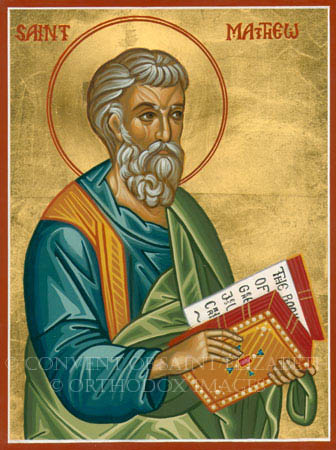
Matthew 14 is a jam-packed chapter. It begins with the beheading of John the Baptist. Next, Jesus feeds the large crowd of 5000. Finally, Peter walking (and sinking) in water occurs in Matthew 14: 22:36.

Context matters

The miracle of Jesus walking on the sea waters is astonishing by itself. But it takes on a whole new and deeper meaning when looking at the events leading up to it.

Jesus was in a state of mourning. His cousin and friend, John, was murdered by King Herod. Christ is fully God AND fully human. In his human nature, Jesus experienced human emotions. Losing John the Baptist most certainly caused him deep sadness.

Beheading of John the Baptist- Matthew 14

`

How have you reacted when a family member or friend dies?

When my grandpa passed away a few years ago I needed a bit of alone time to process his death. And I also needed time to pray.

Likewise, Jesus sought solitude to properly grieve. Saint Matthew tells us, “Now when Jesus heard about John, He withdrew from there in a boat to a secluded place by Himself” (Matthew 14:13). The evangelist doesn’t detail how long Jesus stayed alone but the crowds followed Christ in the next verse. Experiencing hunger and there not being enough bread to feed everyone, Jesus intervened and multiplied the loaves and fish to satisfy the people’s hunger pains.

Feeding of the 5000- Matthew 14

According to Matthew 14: 22-23, “Immediately, He made the disciples get into the boat and go ahead of Him to the other side, while He sent the crowds away. 23 After He had sent the crowds away, He went up on the mountain by Himself to pray; and when it was evening, He was there alone.”  Jesus persisted in seeking a time and place to pray to God the Father. He still needed time to pray. 

That’s the context leading up to Jesus (and Peter) walking on water.  Later this week, I will go over a few of the insights I gained from this Gospel story during Mass and my priest’s homily.


Stayed tuned for the rest of the story! Become an email subscriber to receive Catholic content from The Simple Catholic in your inbox.

Thank you for sharing!

Reflections on the Most Holy Trinity

Our world needs God. This year has definitely reminds us sin exists. We don’t require a dictatorial Supreme Being who imposes rules and restrictions. The backlash caused by the lockdowns across the United States reminds me of the Israelite people in the book of Exodus.

God is Love

Freedom from slavery didn’t free them from selfish tendencies. Moses asked God, “O Lord, do come along in our company. This is indeed a stiff-necked people; yet pardon our wickedness and sins, and receive us as your own (Exodus 34:9).

The easy thing to do during a crisis is to play the blame game. Bad police. Inept politicians. Rage-filled rioters. But the way to true change is not in resentment or scapegoating. Authentic change for a better world is a narrow gate.

Saint John tells us, “God so loved the world that He gave His only Son, so that everyone who believes in him might not perish but have eternal life” (John 3:16).

Trinity Sunday is about unity. The devil divides. In fact, the Greek word for devil, diabolos, means “to divide”. Satan aims to please the self and divide us from the multiplying force of God’s love.

Jesus came to save us from the Great Divider. Last week the Church celebrated the Feast of Pentecost, the Arrival of the Unifying Holy Spirit. While Jesus ascended back to the Father he did promise the Apostles (and us) to send a Helper. Two thousand years later, the Holy Spirit has continued to guide the Church.

Holy Trinity Icon

The Feast of the Most Holy Trinity celebrates the truth that God is love. Three Persons. One God. It is the simplest, yet most mysterious Christian truth.

Know Thy Enemy

Our common enemy hates Love and works to sow division. Satan’s common tactics include:

  • Destroy the family–> the family is an image of the Holy Trinity. Satan despises this reminder of God to the world. Divided families lead to divided societies.
  • Attack when holiness is increasing–> Venerable Fulton Sheen said, “Satan always tempts the pure (holy)—the others are already his.” I find that temptations find me quickly after I receive the Sacrament of Confession. The Devil wants to wound healed souls.
  • Transform suffering into hopelessness–> Satan “hopes” pain leads people toward despairs. He wants suffering to remain at the chaotic (meaningless) level.

Love Transforms Suffering

C.S. Lewis wrote in A Problem of Pain, “God whispers to us in our pleasures, speaks to us in our conscience, but shouts to us in our pain: it is His megaphone to rouse a deaf world” (p.91). I used to think suffering meant I did something wrong. My understanding of suffering was immature— obey God’s laws and receive rewards but disobey and get punished.  The Israelites didn’t listen to God even when He freed them from Pharaoh’s tyranny. Read about the Golden Calf incident in Exodus 32. Moses was PISSED OFF. And rightfully so.

Moses breaking stones tablets

Who else remembers watching “The 10 Commandments” every Palm Sunday? What a classic!


What was the Israelite’s punishment for worshipping a false god? Longer time spent wandering (aimlessly) in the desert. God could have compelled their obedience, yet Love doesn’t operate as a dictator. Freedom necessarily involves the potential of suffering (based on our choices).

Our world is always going to be in turmoil (2020 is not the exception on suffering, but the rule). No amount of sin can separate you from God as long as you sincerely seek repentance **stops typing and jumps for joy**. God the Father, God the Son, and God the Holy Spirit— undivided Unity. Reflect on the Mystery of the Most Holy Trinity this week. Ask God to give you the strength to endure your daily struggles and joy to notice the wonders in your life.

Related Links

Why Trinity Sunday Comes After Pentecost

12 Things to Know and Share About the Holy Trinity

A clever way to explain the Holy Trinity to children

Toddlers: An Adorable Trace of the Trinity!


P.S. Congratulations for reaching the end of this article (or maybe you skimmed). I would play a fanfare on my silver trumpet but I think my mom sold it **jots down ‘new trumpet’ on post-it note**.

Anyways, if you enjoyed learning about the awesomeness of the Holy Trinity become an email subscriber. Enter your email address in the Subscribe to Blog Via Email box and hit the Subscribe button. It’s that easy! Soon you will be receiving  cool Catholic content in your inbox.

Thank you for sharing!

What is the Rosary?

If this year has been anything like mine you strongly desire a sense of normalcy, routine, and stability. Up. Down. Sideways. Left. Right. Cattywampus. Upside down. There’s really no predictability in life anymore. At least that’s what our great Enemy desires us to think.

The Rosary

A spiritual weapon to fight chaos in your life.

The Enemy Loves Disrupting Your Prayer Life

Chaos is a normal part of life since the Fall as told in Genesis 3. Originally, Adam and Eve were created in an original state of justice and union with God. Disobedience to God’s will led to original sin and the consequences of death. But God is love and He didn’t want to give up on humanity so easily.

According to John 3:16, “For God so loved the world that he gave his only Son, so that everyone who believes in him might not perish but might have eternal life.” God became man in the person of Jesus Christ. Saint Paul refers to Jesus as the New Adam (Man).

Since Jesus is the New Adam who then is considered the New Eve (Woman)? The answer is: Mary, the Mother of God.

Saint Jerome wrote in his Epistle 22, “Death came through Eve, but life has come through Mary.” Put another way, Mary gave birth to salvation (Jesus). The angel Gabriel visited Mary by greeting her and calling her the favored one of God. The Hail Mary prayer comes from the first chapter of Luke.

This leads me to the question a lot people have about the Blessed Virgin Mary: what is the Rosary?

What is the Rosary

In short, it is a prayer about the life of Jesus and Mary. Composed of the Our Father and Hail Mary prayers (there are other prayers included which I will go over in future posts), the Rosary helps Christians keep alive the memories of the events in salvation history.

To Jesus through Mary and the Rosary

The word Rosary originates from Latin and means a garland of roses, the rose being one of the flowers used to symbolize the Blessed Virgin Mary.

Praying the Rosary provides a foundation in your life. The repetition helps to form a habit of pondering the Mysteries of faith. Recently, I have struggled mightily with anxiety and depression. I’ve resolved to pray the Most Holy Rosary more frequently. The goal is not to rattle off prayers but to ponder the life of Jesus and Mary throughout your day.

Stay tuned for more in The Importance of the Rosary series. Subscribe to The Simple Catholic to receive email updates about the Rosary and other Catholic content.


“The Rosary is the most powerful weapon to touch the Heart of Jesus, Our Redeemer, who loves His Mother.” — Saint Louis de Montfort

Thank you for sharing!

Jesus and Mary Talk about the Role of Peter Before Dinner

Jesus and Mary


Here’s an imaged conversation between Our Lord Jesus and the Blessed Virgin Mary shortly after Peter’s Confession in Matthew 16:13-20.


Mary: Good Evening, Son. How did your preaching go today? Did those Pharisees change their attitude about you yet?

Who do you say that I am

Jesus: No. This still cling to their rigid judgment. Today, I asked them [the Apostles] who they thought I was. Elijah? John the Baptist? A new prophet?

Those were common answers given by the public. I told them I did not what others thought, but what they thought.

Can you guess who answered my question Mother?”

Mary: Was it that bold and ambitious fisherman? Simon is his name, right?

Jesus: You say so and it is true. Simon recognized me as the “Messiah, Son of the living God.” His name is now changed to Peter meaning “rock”.

I also entrusted to him authority to lead my disciples.

Mary: Do they know?

Jesus: That I must suffer, die, and be raised on the third day? Yes. Peter’s rashness surfaced again. His great passion and love for his teacher made him overprotective of me.

I directly called out his actions as that of the Adversary.

Mary: Though I know your suffering will be a great pain for me, I trust in the will of God.

Jesus: I know. Mother you are most holy.

The Advocate will guide Peter, John, James and the rest once I go back to The Father.

Help Peter in his mission. Be a consolation for him when he experiences distress.

Mary: Yes, my Son. Behold, I am the handmaiden of the Lord. May it be done according to your word.

Jesus: You are indeed most blessed among all women!

I am hungry from the day’s walk. I brought home fish for dinner. Do you want to start the grill fire or should I cook?

Mary: Let’s cook together. You work is mine and mine is yours.

Jesus: Amen!

Grilling fish

[Mary and Jesus end their day with a tasty meal followed by praying the Scriptures before they go to sleep to prepare for another day telling the Good News.]

Thank you for sharing!

Palm Sunday Peace Treaty—Herod and Pilate

palm Sunday icon


Editor’s note: Article originally published on March 29, 2021.


Palm Sunday marks the beginning of the most sacred time in the Christian calendar Holy Week. As a cradle Catholic who attended Catholic schools my entire life, I have heard the extended gospel readings about Jesus’ triumphal entry into Jerusalem many times. On top of that I studied graduate level theology and read spiritual works for fun. I am not telling you this to boast, but rather to set forth my struggle when it comes to these important feast days: how can I learn something new when I have heard the same readings that I nearly have them committed to memory!

Same Old Story

we heard this story before


Sadly, I had this same mindset this morning before Mass. Remarkably, we arrived at the church with a few minutes to spar. After we found a pew, our three-year-old started asking about food (the #1 topic for toddlers!), specifically granola bars. To my dismay, I realized that I failed to stock the mass bag with snacks. I figured Palm Sunday 2019 would end up in a power struggle with a toddler and bitterness over not being able to pay attention to the liturgy. Miraculously, he did not dwell on the granola bars, and I was able to listen to all of the readings including the entirety of the LOTR length Gospel feature!

In between working to keep our children assuaged and paying attention to the Gospel, I noticed a peculiar line that I never heard before. Well, I probably heard that verse, but it probably never registered on my theological radar because I grew lukewarm in my faith. Making a mental note for me to check the passage later I continued to listen to the Gospel. Later in the day, I looked up Luke’s Gospel and found that peculiar verse—Luke 23:12. It reads “Herod and Pilate became friends that very day, even though had been enemies formerly.”

Enemy of My Enemy is My Friend

enemy off my enemy


The classic cliche “an enemy of my enemy is my friend” rings true for Herod and Pilate’s relationship in Palm Sunday’s Gospel. Both men were earthly rulers: a Jewish king and a Roman prefect. During the first century, the Roman Empire occupied the land of Judea.  Charges against Jesus in Luke 23:2 include “tax evasion” against the Romans and blasphemy as he claimed to be God.

According to Christian tradition, the historian Eusebius, ““Luke, who was by race an Antiochian and a physician by profession” (Eccl. Hist. 3.4). The meticulous nature of St. Luke’s prose especially in the prologue of his Gospel makes his passing reference at the sudden friendship of Herod and Pilate mysterious.

Lukewarm Leaders

apathy


Both Herod and Pilate presided over the trial of an innocent man. Both leaders gave in to external pressures to sentence an innocent victim to death. The former had John the Baptist beheaded at the behest of his vile wife, and of course Pilate caved into the pressures of the Jewish religious leaders to have Jesus Crucified. American author Leo Buscaglia declared; I have a very strong feeling that the opposite of love is not hate – it’s apathy. It’s not giving a damn.” Neither Herod nor Pilate “hated” John and Jesus. They balked at sentencing, but because of their weak wills, lukewarmness, and ultimate selfish desire to stay in power they caved to social pressures. Herod and Pilate’s actions showed an apathy over love of God.

pontius pilate

Will You Display Half-heartedness this Holy Week?

According to the Catechism of the Catholic Church paragraph 2094, “lukewarmness is hesitation or negligence in responding to divine love; it can imply refusal to give oneself over to the prompting of charity.” Wow! I did not realize the harshness associated with a lukewarm attitude. Possessing a spiritual “meh” attitude poses dangers of losing out on love. Will you aim to be holy the WHOLE holy week or merely haphazardly? The Holy Spirit prompted me to wake up when I heard Luke 23:12. Lent 2019 I have been mostly a Herod or a Pilate— apathetic toward true love seeking mostly control of my life. The good news is Holy Week is here. We can re-start our faith journey with a triumphal entry like Jesus. Let us ask for the gift of humility and the courage to avoid spiritual lukewarmness.

Related Links

Palm Sunday’s Gospel Drama

7 Palm Sunday traditions at Mass and their symbolism

Thank you for sharing!

Are You a Salt or Sugar of the World

thumbnail_salt

thumbnail_sugar.jpg


According to Matthew 7:15, Jesus cautions us by saying, “Beware of false prophets, who come to you in sheep’s clothing, but underneath are ravenous wolves.” Frankly, I did not realize that adage originated from the Gospels. Beware of wolves in sheep’s clothing. Thinking about this phrase I have come to realize that Jesus is speaking not only to humanity in general, but directly to me! I need to be consistent in my love toward God and my fellow man in order to avoid turning into that same false prophet I am called to be on the look-out for.

Jesus spoke with such clarity and used tangible examples. I am not going to “reinvent the wheel” regarding today’s topic. During his Sermon on the Mount discourse in Matthew 5, the Good Teacher charged his followers to be the salt of the earth.

Above there are two pictures: one is salt the other is sugar. At face value both appear to be indistinguishable—similar to a wolf donning lamb’s fleece is camouflaged from its prey. Salt and sugar play a significant part in our life. Both add flavor to otherwise dull food. Excessive amounts of sodium and sugar lead to health problems. What I want to focus on is the dichotomous relationship between salt and sugar? Am I the salt or sugar of the Earth? Let’s see!

To preserve or not to preserve…that is the question

Aside from flavoring bland dishes or enhancing taste in already good meals, the main purpose of salt is to preserve food against deterioration. Salt draws out excess water from foods and dehydrates it. This process allows for increased storage times—especially in cases where food is in abundance and needs to be saved for later periods. Jesus used the example of salt because of its universal application and practical usage in daily living. He calls Christians to act as theological relish and preservative to society.

Sometimes a little salt goes a long way in improving the taste of food. We need not feel defeated if it feels like we are moving against a seeming endless tide of negativity from the world. Holiness is what all Christians are called to—look at the saints and the witness they provided a world in despair.

Deny Yourself and Follow Him

In high school, I took chemistry and became fascinated with the various atomic structures of elements, molecules, and compounds. I found a certain beauty in their ordering and design. Below are picture of the atomic structure of NaCL [sodium chloride- table salt] and C₆H₁₂O₆ [glucose- a common sugar].

thumbnail_glucose atom.jpg


thumbnail_salt atom.jpg


From a microscopic vantage point, a clear distinction may be made between these two common household items. Both are composed of entirely different elements [hydrogen, carbon, and oxygen in Glucose] and [sodium and chloride in salt]. Along with the having different building materials, sugar and salt are fashioned with different types of bonds—covalent and ionic respectively. Covalent bonds are stronger because the shared electron is what keeps the elements held together whereas in an ionic bond one element loses an electron to another causing one element to become positively charged and the other to become negatively charged such as in the case of NaCl or table salt.

In other words, the elements in table salt lose an electron to effect the ionic charge of the sodium or chloride molecule. Initially, losing may be viewing negativity [no pun intended!]. One may think that due to the stronger nature of the covalent bond in sugar that it should be preferred to salt. The New Testament does shed some light on the reality of loss and rejection. Luke 9:23-25 turns this notion on its head when Jesus says,

“Then he said to all, ‘If anyone wishes to come after me, he must deny himself and take up his cross daily* and follow me. 24For whoever wishes to save his life will lose it, but whoever loses his life for my sake will save it. 25What profit is there for one to gain the whole world yet lose or forfeit himself?'”

Christ’s words elicit a sense of paradox, yet allure within my mind. Interesting, I gain life when I serve other’s needs above my selfish desires. In my weakness I am stronger! Through a theological ionic bond, Christians act as holy seasoning to embolden our world.

thumbnail_dr crentist.jpg

Instant Gratification Leads to Decay

Dentists frighten me. Not in The Exorcist or The Shining sort of way. Still, I get apprehensive, anxious, and move toward hypochondriac-like behaviors when the subject of dentists come up. Perhaps, it stemmed from my penchant as a little kid for losing my teeth quickly and easily. Or maybe my periodontal panic happened due to my need for braces– not once, but twice in my elementary school years! Regardless of where this toothy torment began, I recognize that when I limit my sugar intake life is much easier during my semi-annual check-ups.

Excess Destroys

Excessive sugar proves damaging to both our physical and mental well-being. Unhealthy attraction to sugar is simply a euphemism for the sin of gluttony. Our society suffers from the belief that instant gratification is better than self-denial or self-control. I am as guilty of this vice as anyone. I have made it a point to limit my sugar consumption and practice fasting– to help me both spiritually and physically. Jesus chooses not to use sugar as an example to relate to Christians because he understood the appeal and temptation this food item poses for humanity.

While sugar and salt look similar in outward appearance the two are vastly different. How do we distinguish between the two? First, we learn to trust the authority of the manufacturers, distributors, and sellers of these products. We trust that the packaging is correct. When a box at the grocery store says “SUGAR” it really is sugar and not salt. A second way to learn is more difficult– through the school of experience. Maybe sugar is housed in a clear container in your home. If you forgot to label it only tasting the substance, will you determine if it truly is sugar and not salt.

How Will You Season the World?

The same may be said about temptations and goods sent our way. Oftentimes, Satan dresses up sin as “sugar” to enhance its allure. This makes is easier to fell prey to his trap. Our adversary disguised sin under the costume of a juicy fruit– see Genesis 3 for the story of the Fall. May we continue to rely on the tradition of the Catholic Church, Sacred Scriptures, and testament of the saints for guidance in our journey toward holiness. Let us be the salt of the Earth and preserve society! There is more to you than meets the eye.

thumbnail_more than meets the eye.jpg


Related Links

Why Saint Ambrose’s Sweet Life Can Combat the Saltiness of the World

Being the Salt of the Earth and Being Salted with Fire

Thank you for sharing!