Why Saint Luke is Awesome: History + Theology

The Historian of the Heart

Last October, I missed celebrating the Feast of Saint Luke. It wasn’t intentional; life just got busy. Between teaching, family life, and parish commitments, October 18th quietly slipped past. But ever since then, I’ve felt an unmistakable pull to know this Gospel writer more deeply, not just as the “beloved physician,” but as the evangelist of mercy, faith, and ordered reason.

As someone with a background in history, I’ve always admired Luke’s approach to truth. His Gospel begins not with poetry or mystery, but with method: an introduction that reads like a historian’s preface. “Since many have undertaken to compile a narrative… I too have decided, after investigating everything accurately anew, to write it down in an orderly sequence for you, most excellent Theophilus…” (Luke 1:1–3). He’s transparent about his sources and his purpose so that we may “realize the certainty” of our faith.

There’s something deeply comforting in that. Luke reminds us that Christianity isn’t a myth or an emotional movement; it’s a faith rooted in reality, built on eyewitnesses and examined testimony. Saint John Paul II beautifully captured this when he wrote that Luke “leads us to knowledge of the discreet yet penetrating light that radiates from the Word.” Luke gives us not just the facts of salvation history but the warmth of faith that makes those facts alive.

Continue reading
Thank you for sharing!

7 Reasons Why October is an Extra Holy Time

october.jpg

“Autumn is a second spring when every leaf is a flower,” stated Albert Camus the 20th century French Novelist. Fall is my favorite time of the year. Colorful leaves carpet the lawns in my neighborhood. I enjoy seeing the visible transformation occur on trees and watching animals prepare for winter. My wife’s birthday is during October—the middle of fall. I am indebted to God for the gift of my marriage. Without my wife, my fervor for Divine Mercy and St. Maria Faustina—her confirmation saint— may not exist!

Reflecting on autumn, my wife, and the Polish saint allowed for me to have a profound revelation: October contains an all-star line-up for saint feast days!

Five of my personal favorite saints, and historical favorites among Catholics as well, have a feast day in the first part of October. On top of this amazing realization, October is also dedicated to the Holy Rosary and respect for all life. I will be dedicating other posts on these topics so I will focus on the seven feast days of stellar saintly role models:

Guardian Angel meme

Guardian Angels

My children and I ask for the intercession of our guardian angels every night before bedtime. According to the Catechism of the Catholic Church number 336, “From its beginning until death, human life is surrounded by their watchful care and intercession.202 ‘Beside each believer stands an angel as protector and shepherd leading him to life.’203 Already here on earth the Christian life shares by faith in the blessed company of angels and men united in God.” God sends his messengers from Heaven to keep us safe and remind us of His Presence.

St. Therese of Liseux quote

Therese of Lisieux

According to St. Therese, “Our Lord does not so much look at the greatness of our actions, or even at their difficulty, as at the love with which we do them.” Known as the Little Flower, the saint’s words provide a fresh perspective on my daily living and struggles. As a person who focuses on problems as something to be overcome, I sometimes place an emphasis on the amount of effort I have to put forth on a task. I also struggle with desiring recognition toward my works. Instead, if I focus on love as St. Therese teaches us, my life will be more joyful!

Francis of Assisi

Francis serves as an example of holiness, but for me, it is a personal reminder for my college days. I attended Franciscan University graduate schooling. The legacy the Italian saint left on me is truly immeasurable.

His transformation from a wealthy individual to a beggar of Christ is a tangible example of the Gospel lived out. Struggling with envy and greed myself, I am able to look to Francis of Assisi as a role model. Lord make me an instrument of peace like your servant Francis!

have mercy gif.gif

Maria Faustina

No other 20th century saint, besides John Paul II and Maximilian, has impacted me as much as St. Maria Faustina. Known as the Apostle of Divine Mercy, the Polish nun is to the 20th century what St. Paul was to the 1st century Church—the evangelizer of truth to the Gentiles! Sister Faustina helped console my wife after a good friend from high school died suddenly.

The Polish sister led my wife to convert to the Catholic faith as well! She has been instrumental in deepening my relationship with God over the past decade. St. Faustina is probably the biggest influence on viewing God first as a merciful Father as opposed to a vengeful Judge. Through St. Maria Faustina I heard God’s truth in her words, “Suffering is the greatest treasure on earth; it purifies the soul. In suffering, we learn who our true friend is.”

Our Lady of the Rosary

While the entire month of October is dedicated to the Rosary (another reason to love this month!), Catholics celebrate Our Lady of the Rosary on October 7th.

Our Lady of the Rosary holds immense importance in the Catholic faith and Christian tradition. This title honors the Virgin Mary as the Queen of Heaven and a powerful intercessor. The rosary, a centuries-old prayer practice, is closely linked to this devotion, believed to have been revealed by Mary to Saint Dominic in the 13th century.

Beyond its historical roots, Our Lady of the Rosary plays a vital role in the daily lives of Catholics. Many turn to Mary for guidance, protection, and assistance. The rosary, a tool for meditation and reflection, deepens the connection with God and fosters unity among believers worldwide. It serves as a symbol of faith, hope, and unity, reminding us of Mary’s enduring grace and mercy.

Saint Teresa of Avila

Teresa of Avila

Another example of heroic holiness in October is Saint Teresa of Avila. Her life differs from Maria and Therese as the Spanish saint lived a much longer life. Teresa also experienced more of a 180°-type of conversion.

As a young adult, Teresa enjoyed the allure of the world. It wasn’t until her entry into the convent that the Spanish nun learned the importance of meditative prayer. Teresa’s The Interior Castle is a profound spiritual work that explores the vastness of our spiritual journey. This spiritual treatise has helped aid me on my journey.

Saint Luke

The Catholic Church celebrates the Feast of Saint Luke on October 18th. As a writer of one of the four Gospels, Luke had a special role in the early Church. He was also a traveling companion to Saint Paul and penned the Acts of the Apostles. Paul makes reference to Luke’s profession as a doctor (Colossians 4:14) and the Lord had even bigger plans for this saint. Inspired by the Holy Spirit, Luke provides us with an amazing account of Jesus’ life and shares parables like the Prodigal Son and Lost Sheep.

Saint Luke is an advocate for passing on the faith. Celebrate his feast by reading from his gospel account or from Acts of the Apostles.

While autumn is akin to a second springtime, my communion with the saints during October is like a second spiritual springtime for me. My guardian angel, Therese of Lisieux, Francis of Assisi, Maria Faustina, Luke the Evangelist, Teresa of Avila, and the Blessed Virgin Mary reflect God’s merciful and transforming love.

Through communion with these exemplary role models I am given hope that my personal vices of greed, envy, and pride are able to be overcome! The Church teaches “We worship Christ as God’s Son; we love the martyrs as the Lord’s disciples and imitators, and rightly so because of their matchless devotion towards their king and master. May we also be their companions and fellow disciples!” (CCC 957). I pray the communion of saints will continue to guide you in your path toward holiness and ultimately lead us closer to God.

journey

Related Links

3 Ways St. Maria Faustina Provided Buoyancy in the Overwhelming Ocean of Life

5 Astonishing Facts about Your Guardian Angel

St. Francis of Assisi: Lover of the Eucharist

Why I Absolutely Love Saint Therese Of Lisieux


P.S. Want more inspiring Catholic content?

Obviously, the answer is yes 😀 (who doesn’t want more information about Therese of Lisieux 🌸🙏?!)

Become an email subscriber (enter your email address in the Subscribe to Blog Via Email box and hit the Subscribe button. It’s that easy! Soon you will be receiving exclusive content from The Simple Catholic in your inbox to brighten your day or week.

Thank you for reading and hope you have a blessed day!

Thank you for sharing!

A 1021 Word Interview with Playground Saints


Editor’s Note: Matthew Chicoine interviewed Sophia Chamblee via phone call on August 9th, 2025. Some of the questions/answers have been rearranged, edited, and paraphrased to provide the best reader experience without losing any integrity of the answers given.


What inspired you to start Playground Saints?

I think the inspiration started up around Covid. I noticed people starting up these small businesses. It started as an Etsy stop with bookmarks. The bookmarks were like a humble beginning. I really like stickers and I noticed that other shops prioritized stickers. I wanted to have stickers as my own. 

After I graduated college, I got a printer and cricut. I use an app call Design Space. 

What saints did you begin with for your stickers?

I use the same designs of Padre Pio, and Therese of Lisieux, and Mama Mary as when I began.

Thomas Aquinas and Martin de Porres and Rose of Lima were original saints that I have later upgraded the designs.

Your logo, “Mama Mary and Son,” has such a warm, whimsical feel. What was your inspiration? 

Continue reading
Thank you for sharing!

Saint Peter and Saint Paul: Keepers of the Keys and Witnesses of Love

Guest Post by: David Tonaszuck

A reflection on the Gospel of Matthew 16:13-19

My beloved brothers and sisters, today we hear the gentle voice of our Lord calling out: “My son, my daughter, I love you so very much and am always with you; come and be by my side and together our hearts shall be one; one with our Father in heaven, united with the Holy Spirit.” These words, so simple and so intimate, are at the very heart of our faith. They remind us that Christianity is not just a set of rules or distant promises; it is a relationship. God wants to be close to us, to make our hearts one with His.

And yet, as close as God draws us, He also sends us. Today, we remember our calling as Christians. We help others move closer to God and walk with them on the path that leads to our Lord. This task doesn’t belong to priests or saints alone. God calls each of us, like Saint Peter and Saint Paul, to keep the keys to the Kingdom of Heaven.

The Keys to the Kingdom

What are these keys? They aren’t something we can hold in our hands. They are brought to us by faith; by our simple Yes to God’s love. When we open our hearts and welcome the Father’s love, the Holy Spirit draws us closer to Jesus, especially through prayer and the sacraments. In the Eucharist, we encounter Christ’s living presence, the Paschal Mystery made real: He is our Lord, our Dearest Friend, our Guide, our Support, our Savior. The more we partake of Him, remembering His sacrifice and resurrection, the more He transforms us into His likeness. He then sends us to share Him with others.

Peter’s Confession: The Foundation of Our Mission

Today’s Gospel from Matthew highlights this very mission. When Jesus poses the profound question, “But who do you say that I am?” Simon, whom Jesus would later call Peter; meaning Petra or “rock” in Greek, steps forward as the first to proclaim: “You are the Christ, the Son of the living God.” Jesus responds, “Blessed are you, Simon son of Jonah. For flesh and blood has not revealed this to you, but my heavenly Father.” Peter’s declaration of faith becomes the bedrock upon which Jesus establishes His Church. This mission isn’t exclusive to Peter; it is entrusted to all of us, the entire Body of Christ.

The Keys Entrusted to the Church

Saint Augustine reminds us that the keys were given to the entire Church, considered as one. When Jesus said, “To you I give,” He meant it for all who make up His Body: for all times, past, present, and future.

So what does this mean for us, here and now? It means we follow Peter’s example: we confess our faith, claim Jesus as the Son of God, and share this Good News. We trust, obey, and love our LORD God, deepening our relationship with Him and entering into His covenant of love.

Strength in Faith

This isn’t easy. From Peter’s day until now, many have given everything, even their lives, to build up the Body of Christ. But as Saint Paul writes to Timothy, “The Lord stood by me and gave me strength, so that through me the proclamation might be completed…and I was rescued from the lion’s mouth. The Lord will rescue me from every evil threat and will bring me safe to his heavenly Kingdom.” We are never alone. The Lord is always with us, protecting us and giving us strength to help others find their way home.

live purposefully

Called to Proclaim God’s Love

As key holders to the kingdom of heaven, we proclaim the Father’s love—revealed through Jesus—in everything we do. When we allow the Holy Spirit to fill our hearts, love pours out of us so abundantly that we cannot help but share it. We begin to see our neighbors as God sees them; we recognize Jesus in the faces of those around us. In this, we find true peace, joy, and love.

This is how we fulfill our calling: by loving God with all our heart, soul, mind, and strength, and loving our neighbor as Jesus loves us. We say yes to the Father’s will and help build up the Body of Christ around us, united with the Holy Trinity and in community with each other.

My dear children, you hold the keys to the kingdom of heaven. Go out with love. Give praise, thanksgiving, and glory to our Father in heaven, and love those around you as He loves you.

Amen.

Learn More about the Bread of Life

About Live the Eucharist

About Our Guest Blogger

Blessed Carlo Acutis once said, “Not me, but God.” His words echo deeply in my own spiritual life. This blog is not about me, but about the work of the Holy Spirit. I choose to remain anonymous because the voice behind these reflections isn’t what matters — the One speaking through them is.

I am a lifelong Catholic with a deep love for Scripture, the sacraments, and the quiet ways God speaks through everyday life. Live the Eucharist was born from my desire to share how the Gospel and the Eucharist shape not just my Sundays, but every step of the journey.

My hope is that these reflections bless you, challenge you, and draw you closer to Jesus — truly present in the Eucharist and profoundly present in your daily life.

Thank you for sharing!

3 Reasons Why Peter and Paul Share the Same Feast Day

Early on the history of the Catholic Church an admiration existed for Peter and Paul. Aside from Jesus Christ himself, these two men are the main characters in the New Testament. In his First Epistle to the Corinthians, church leader Clement of Rome tells of the leadership of Peter and Paul. He wrote,

There was Peter who by reason of unrighteous jealousy endured not one not one but many labors, and thus having borne his testimony went to his appointed place of glory. By reason of jealousy and strife Paul by his example pointed out the prize of patient endurance…Unto these men of holy lives was gathered a vast multitude of the elect, who through many indignities and tortures, being the victims of jealousy, set a brave example among ourselves (First Epistle of Clement of Rome to the Corinthians 5:4-6:1).

sts-peter-and-paul.jpg

Living in the 1st century A.D., Clement’s praise of the first leaders of the Church shows something special changed these men. God selected a simple fisherman and a reformed murderer to head the Catholic Church. I believe the Holy Spirit guided the Church to forever link these two saints lives through having the same feast day on June 29th.

Creativity of Truth [Saint Paul]

Having the ability to think outside the box and preach to vastly different audiences is a gift. St. Paul possessed both creativity and the flexibility to frame his thoughts to fit the needs and understanding of his particular audiences. Writer of almost 2/3 of the New Testament, St. Paul represents the creative aspect of the Catholic faith. He brings to the table dynamic, vibrant, creative theology to teach Christians in the early Church and today.

The Apostle of the Gentile used many tangible and relatable examples to teach the faith. One of my personal favorites comes from 1 Corinthians 12. Paul clearly and succinctly communicates the fact that unity is found within diversity. He provides the analogy of the Church consisting of one body with many parts and Jesus Christ as the ultimate head of the body.

Another clear and understandable example of the love and teaching of God is St. Paul’s frequent references to Christians as adopted children of God. In Romans 8:14-17 he writes,

For those who are led by the Spirit of God are children of God.j15For you did not receive a spirit of slavery to fall back into fear, but you received a spirit of adoption, through which we cry, “Abba,* Father!”k 16The Spirit itself bears witness with our spirit that we are children of God,l 17and if children, then heirs, heirs of God and joint heirs with Christ, if only we suffer with him so that we may also be glorified with him.

creatitivity.jpg

Stability of Truth [Saint Peter]

Unlike Paul who represents the intellectual, creative, and theological side of truth, Peter is a model for the consistency and enduring nature of Catholic teaching. Jesus instituted the papacy in Matthew 16:17-19. According to the evangelist the charge to the future pope went as follows,

Jesus said to him in reply, “Blessed are you, Simon son of Jonah. For flesh and blood* has not revealed this to you, but my heavenly Father. 18k And so I say to you, you are Peter, and upon this rock I will build my church,* and the gates of the netherworld shall not prevail against it. 19l I will give you the keys to the kingdom of heaven.* Whatever you bind on earth shall be bound in heaven; and whatever you loose on earth shall be loosed in heaven.

The lead up to this significant institutional passage is Peter’s realization of Jesus’ true identity as Christ. Through the guidance of the Holy Spirit, Peter led the Catholic Church after Jesus’ ascension to Heaven. He led the Council of Jerusalem in Acts 15 and displayed the ultimate mark of faith in his martyrdom. The Holy Spirit guides the papacy. This office acts as the supreme authority on matters related to faith and morality.

the rock.jpg

Analogy of Tetherball

Truth is unchanging but our understanding of truth developed over the centuries. The genius of the Catholic Church is apparent in the consolidation of Peter and Paul’s feast on a single day. There is a schoolyard game that comes to mind to describe the relationship between the first pope and the great Apostle to the Gentiles—tetherball! Incidentally, it was not until my early twenties that I discovered the joy and fun this recess game provides despite its simplistic nature. I even purchased a tetherball at my local sporting goods store in hopes to eventually install a tetherball post in my background.

To get back from my tetherball tangent, the post in this game reminds me of the stability of the papacy of St. Peter provides. The ball and rope represent the creative theology of St. Paul. Both are essential aspects of the game [and the Catholic faith].

The Stable and Creative Church

Without the stability of the papacy, truth devolves into subjectivity and confusion ensues. Likewise, an absence of dynamic theological thought [represented by Paul] leads to staleness, rigidity, and irrelevancy of Catholic teaching. Remember kids recess is an important subject in school too—you never know when you can apply lessons from leisure to real life!

tetherball2 .jpg

Pope Francis on June 29th, 2017 declared, “The Fathers of the Church liked to compare the holy apostles Peter and Paul to two columns, on which the visible building of the Church rests. Both sealed with their own blood their testimony to Christ of preaching and service to the nascent Christian community.”


Saints Peter and Paul pray for us!!

Related Links

6 Amazing Things to Know About Saints Peter and Paul

Saints Peter and Paul- Catholic News Agency

Thank you for sharing!

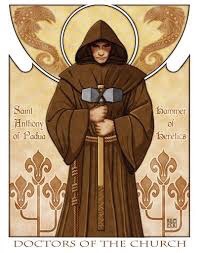
Happy Feast Day St. Anthony of Padua!

June 13th is always a special date for my family: it is my oldest son’s birthday–and the feast day for Saint Anthony of Padua! Primarily known as the Patron saint of lost items, Anthony was my mom’s go-to saint the many times she lost her keys, purse, or other important articles either at home or work.

Saint Anthony of Padua

Not Simply a Patron for Chronic Losers (of Items)

Anthony lived in the 12th century and was a Portuguese Catholic priest. He became a friar of the Franciscan Order. Like St. Francis of Assisi, Anthony came from a wealthy family but lived a humble and obedient life in service to the Lord. He is best known for his outstanding preaching and expertise of the Scriptures.

What I just recently learned is that St. Anthony is actually a Doctor of Church. He is a spiritual giant in the history of Catholicism. Not all does he aid us daily affairs (like losing our keys for 37th) but the saint’s writings inspire hope and inform us about God’s love.

Along with celebrating my son’s birthday, I wish to discover the great wisdom of St. Anthony of Padua. Find your faith with the help of the great patron of Lost Items! **stops typing and searches pockets to make sure car keys are still there**

Below are a few simple yet powerful quotes from the great Doctor of the Church to help you discover [or rediscover] your faith in the Good News of the Gospel!

Enjoy!

Wisdom from the Evangelical Doctor

“Attribute to God every good that you have received. If you take credit for something that does not belong to you, you will be guilty of theft”

“Christians must lean on the Cross of Christ just as travelers lean on a staff when they begin a long journey.”

“The devil is afraid of us when we pray and make sacrifices. He is also afraid when we are humble and good. Satan is especially afraid when we love Jesus very much. He runs away when we make the Sign of the Cross.”

“The saints are like the stars. In his providence Christ conceals them in a hidden place that they may not shine before others when they might wish to do so. Yet they are always ready to exchange the quiet of contemplation for the works of mercy as soon as they perceive in their heart the invitation of Christ.”

Related Links

St. Anthony Shrine

St. Anthony to the Rescue

St. Anthony, Cooler Than Just Finding Your Lost Crap


P.S. Thank you for reading about Saint Anthony. He’s the ‘bee-knees’ (or is it St. Ambrose, the patron of bees?). No matter, I appreciate you reading and hope you have a wonderful day. Ask Anthony for help if you lose something (don’t feel bad I lose something almost daily).

If you enjoyed learning about this saint become an email subscriber. Enter your email address in the Subscribe to Blog Via Email box and hit the Subscribe button. It’s that easy! Soon you will be receiving cool Catholic content in your inbox.

Thank you for sharing!

A 1013 Word Interview with Industrious Family about Fabiola


Editor’s Note: Matthew Chicoine interviewed Kathleen, Mary, and Faustina Bowen via phone call on October 21st, 2024. Some of the questions have been rearranged and edited to provide the best reader experience without losing any integrity of the answers given.

Images were provided courtesy of Kathleen Bowen.


How did you come across the book Fabiola?

Faustina: We attended Our Lady of Victory Homeschool and this book was part of the 9th grade curriculum. The author told the story of Saints Sebastian and Agnes differently than you heard before. Saint Pancratius is another saint you discover in the book that you don’t hear about often.

Is he a prominent character?

Yes, both in the book and our film adaptation.

“Fabiola draws parallels between third-century Rome and our contemporary world.”

When did you seriously consider making this a film?

Mary: In 2018 we made a feature film with a budget of about $5000 called “Outlaws of Ravenhurst”. In 2020, we made another feature length (Grisly Grisell) and made a short film between now and then to perfect our skills. We knew after this short film we wanted our next feature film to be Fabiola. Over the past five years we have been working on this project. We have five drafts of this film.

Could you share specific examples from the film that you think will particularly resonate with modern audiences?

Faustina: Fabiola really talks about Rome when it is on the brink of collapse. I feel like a lot of people in our day feel like our culture is in a period of collapse. Fabiola ends on a note of hope. High times in history also come from the brink of low times or times of trial. And we may be on the brink of that (hope) with our society.

In adapting this historical narrative for the screen, how did you balance staying true to the historical period while making it accessible and meaningful for today’s viewers?

Mary: When we took the book and turned it into a screenplay we found some of the characters didn’t always have situations that translate to today. With some of the saints they didn’t seem to have personalities, we wanted to show that these characters are individuals and we wanted to showcase both their weaknesses and strengths to show how they can be relatable to us today.

For example, some of the saints were very lofty and aloof. When you are writing a script you are peeling the character apart like an onion to see the layers. We gave the characters a particular vice in the story to make it more relatable. The saints were focused on trying to overcome the vice whereas the other pagan characters weren’t as interested in overcoming the vices. So when we re-added the flesh/depth of the character these saints were different from what the original text portrays (which was more one-dimensional).

The film seems to explore themes of sacrifice and unwavering faith. Could you tell us about a particular scene or character arc that you feel most powerfully conveys these themes?

Faustina: I would say one of the most powerful examples of this is a fictional character (Syra), the Christian slave of Fabiola. Syra said, “She is sacrificing every moment of her life to bring the Gospel to Fabiola.

Kathleen: While the themes of sacrifice and faith are strong, I really think the audience is going to leave the theater with a strong sense of forgiveness from the film. In a lot of ways the film could be titled, Fulvius, after the villain. Our film will highlight the Catholic understanding of forgiveness which is really about asking God for forgiveness, then forgiving ourselves, and it’s really a bonus if others forgive us.

What inspired you to choose this specific story from Christian history, and what unique perspective does Fabiola offer compared to other faith-based films?

Faustina: Two of the characters in Fabiola are converted like how Peter and Paul are converted. One character is converted more through words than a dramatic way. She has a more sophisticated conversion. Another character has more of a Pauline conversion (knocked-off his horse). Something very momentous occurs to him and this causes him to change his ways.

In creating this film, what challenges did you face in depicting the early Christian experience in a way that would speak to both Catholic and broader audiences?

Mary: We didn’t compromise the dialogue (the word Catholic doesn’t appear in the script- we use the term Christian). Hopefully, this film is a way to bring Protestants into a realm that these are people (the martyrs) they can find heroes in. One major sticking point might be Constantine, but he is not a major figure in Fabiola.

Faustina: The thing I wanted to add, we recently watched the old Charlton Heston The Ten Commandments and we want the quality of the film to be like that movie. While it’s a Protestant made film it still appealed to Catholics. Likewise, we see our vision for the film to be similar to that high quality of faith that it appeals to a broader Christian audience. One of the patrons is actually a Baptist.

As this is your fifth film, how has your approach to creating faith-based content evolved, and what lessons from your previous projects influenced the making of Fabiola?

Mary: Something we have learned over the years, that we haven’t heard criticisms from people is that the acting is bad. We have made the lines digestible, working on camera angles. Learning how to run schedules, working with a larger cast. Also, we have been able to shift our attention from filming to the more detailed things (better scripts, building the set in an existing structure that was in the Roman area).

Kathleen: Me watching Faustina and Mary directing this time I have noticed the amount of creativity and time spent in preparation has been impressive. The time dedicated to the details and preparation really made the difference with Fabiola. It has taken seven years to get to a point where the product turns out where it looks like a movie. None of us went to film school this was all self-taught.

How can my audience support you in this project?

Faustina: We have a newsletter for them to receive updates. They can also contribute or invest at Industrious Family.

About the Bowens:

Mary Bowen and sister Faustina along with their mother Kathleen have been producing and directing films for nearly a decade. Fabiola will be the Bowen family’s first film with a full budget projected to be $1.25 million.

Thank you for sharing!