My Journey to Becoming Catholic— Guest Post

By: India Akua Mendonca

The thought of being confirmed as a Catholic on March 30, 2024, at the Easter Vigil on Saturday brings to mind all the people who have been instrumental in my journey. My birth father, my mother-in-law, my younger sister, Father Marlon, and my Rite of Christian Initiation of Adults (RCIA) teacher, Karen, who also sponsored me into the Catholic Church, have all played significant roles in bringing me back to God and reigniting my childhood memories of Catholic school. Their support, guidance, and unwavering faith have inspired me and helped me grow in my own faith. I am grateful for their presence in my life and for the opportunity to become a confirmed Catholic.

Faith Influences During My Early Life

My father encouraging me to attend Catholic school as a young girl played a crucial role in introducing me to the Catholic faith. For this, I am eternally grateful.  The values and teachings I learned in school have shaped my beliefs and provided constant guidance and comfort in my life.

Fast forward to my life as an adult— as a wife and mother; it was my mother-in-law who suggested that we attend a Catholic Church back in 2019, while she was visiting us from East Providence, Rhode Island. And so we did. My mother-in-law, my daughter, and I started attending the Queen of Peace Catholic Church in Clearlake, CA.

However, after a year of attending the Queen of Peace Catholic Church, the COVID-19 pandemic forced us to stop going to Mass altogether. The pandemic had affected my life, including my faith. Nevertheless, through technology and the power of connection, a simple text message from my sister, Kortney, reignited my desire to be part of the Catholic Church. She introduced me to Father Mike Schmitz’s ‘Bible in a Year’ podcast, which allowed my family and me to continue growing in our faith, finding strength, hope, and a sense of community during those challenging times.

Impact of the Pandemic

The COVID-19 pandemic brought about numerous disruptions and challenges but it also led to some positive changes in our lives. One such turning point in our spiritual journey occurred when my sister introduced me and my family to Father Mike Schmitz’s podcast in 2023. Additionally, my mother-in-law suggested we attend the Catholic Church in 2019 before the pandemic, and our daughter got baptized during the pandemic.

It is because of these two beautiful ladies in our family that we have grown closer to our faith and strengthened our ties with one another. In fact, my husband began attending Mass every week shortly afterward.

Listening to God’s Word at Mass

Attending Mass every week and listening to Father Marlon’s sermons played a big part in my desire to convert. His words and guidance have been instrumental in helping me fully comprehend and embrace the beliefs and customs of the Catholic Church. As a result, I am currently a student in the RCIA program. To make our journey into the faith even more special, my husband also attends confirmation classes and will confirm as a Catholic on Pentecost Sunday.

Last but not least, Karen, my RCIA teacher and sponsor, has strengthened my faith in God and motivated me to become Catholic. She transformed my life and helped me find a sense of community and belonging that  I had been missing. Her willingness to share her backstory and her faith with me has made a difference in my life. Therefore, I cannot overstate the importance of community and the power of our own personal testimony.

Thankful for My Sponsor and Teacher

My teacher and sponsor patiently answered all my questions and provided me with the resources and support I needed. She also showed me the true values and teachings of the Catholic Church and introduced the Symbolon workbooks and DVD to me, which are the best study materials to present the truths of the Catholic faith and history. Our friendship and bond continue to grow as we share our experiences and support each other in our spiritual journeys. I am grateful to the Catholic Church for bringing us together and for providing me with a strong support system.

Helping each other and being a community is a biblical concept; we are shown the significance of this through scripture. Here is a verse that emphasizes the importance of community living:

Two are better than one, because they have a good reward for their toil. For if they fall, one will lift up his fellow; but woe to him who is alone when he falls and has not another to lift him up. Again, if two lie together, they are warm; but how can one be warm alone? And though a man might prevail against one who is alone, two will withstand him. The inspired writer of Ecclesiastes wrote, “A threefold cord is not quickly broken” (Ecclesiastes 4:9-12).

In all, it took a community of family members and friends to get me to where I am today in my Catholic faith. I couldn’t have done it without them. With their help, I was able to find my Godmother, my faith, and the Catholic Church. I incredibly gratefully thank them for their support and guidance, and I excitedly anticipate confirming as a Catholic at the Easter Vigil on March 30th, 2024, because of their influence, encouragement, teachings, dedication, and prayers.

About Our Guest Blogger:

As a stay-at-home mom, India Akua Mendonça leads a fulfilling life balancing motherhood, wifehood, and personal interests. She enjoys writing, studying the Bible, exploring new places, going to the beach, eating at restaurants, and listening to Father Mike Schmitz podcast.

India earned her A.A. in Liberal Arts from Chabot Community College and her B.A. in Black Studies from University of California, Santa Barbara. Prior to dedicating her time to her family, India worked at the Martin Luther King, Jr. Research and Education Institute at Stanford University as a Document Specialist.

Currently, she is a dedicated homeschool teacher to her six-year-old daughter and takes great joy in witnessing and cultivating her education. India resides in Clearlake Oaks, CA with her husband Marco, their daughter, and their three birds.

Thank you for sharing!

A 978 Word Interview with Deacon Andy Weiss


Editor’s Note: Matthew Chicoine interviewed Dcn Andy Weiss, Deacon in the Diocese of Las Cruces, New Mexico, via phone call on February 10th, 2024. Some of the questions have been rearranged and edited to provide the best reader experience without losing any integrity of the answers given.


Tell me a bit about your faith journey.

I was born and raised Catholic. I was in the Air Force and had a temporary stay in Spain, but those I listened to had anti-Catholic sentiment and this caused me to leave the Church when I was 20. For three and a half years, I was an anti-Catholic Protestant. I bought the King-James Bible and got to a point of crisis. At his point, I told God to explain to me or I will leave organized religion. I opened the Bible to the book of Romans and this was what helped keep me in organized religion.

Coming back to the Catholic Church was a long journey, but because of my experience with reading the Bible and listening to various arguments from Protestants. I would study the arguments using a bible dictionary, concordance, Bible, notepad. I would do a word study to look up all the references to better understand what that meant.

In the 1990s, I met my wife in a “chat-room” on Catholicity. And after we got married, my wife and another Catholic we also met online “ganged up” on me and said that I should be a deacon. In 2009 the formal process started, I had a desire to preach and bless things. I got ordained in 2015.

How has the sacrament of Holy Orders impacted your marriage?

It’s a balancing act. We must make time for one another. You can get sucked into the ministry. We were taught in our studies that my primary vocation is marriage and to my family. The diaconate is my secondary vocation.

I have to be conscious of my schedule. In addition to the diaconate, I also design websites. We have a Shroud Museum in our city, and I made the website. I must organize my time and ensure I make time for my wife and daughter. The permanent diaconate has made me more conscious of my time and how I spend it.

Describe the fruits of the permanent diaconate in your life.

It started in the program itself, I could have taught a lot of the classes but I was there to learn. The diaconate is about forming you into a person.

One of the important aspects of the diaconate is our devotion to Mary. The last part of Church teaching was Mariology, and I didn’t understand at this time. We wrote an article about our relationship to Mary. It was then that I realized that I couldn’t be a good diaconate without Her help. I formally gave myself to the Blessed Virgin Mary in January 2018 using the book “33 Days to Morning Glory.” I scheduled to have the book end on January 1st, the Solemnity of Mary, Mother of God. During my homily, I said, “It’s like I’m looking at my Mother for the first time.” This was a deep experience for me.

What do you see as the fruits of the permanent diaconate for the Catholic Church?

What happened to me was a transformation. The Church ordaining men who have one foot in the secular world and one foot in the faith world, leads to transformation. I noticed when I wore my clerics while doing ministry people would assume I was a pastor. It gave me an opportunity to explain I was a Catholic deacon.

The deacon models to the laity what it means to be a servant for the Church. While the priest stands In persona Christi (in the Person of Christ), the deacon represents Christ the Servant. Paragraph #1570 of the Catholic of the Catholic Church says: 

“Deacons share in Christ’s mission and grace in a special way. The sacrament of Holy Orders marks them with an imprint (“character”) which cannot be removed, and which configures them to Christ, who made himself the “deacon” or servant of all.”

Well said, the diaconate is like a bridge to God. What’s the most misunderstood aspect of the diaconate?

I don’t think Catholics are catechized well. One day I had my alb on and a fellow parishioner said, “Hello Father.” I clarified I wasn’t a priest. It’s interesting to see the laity’s relationship with deacons.

The diaconate opens opportunities to ask questions about the faith. People feel more comfortable reaching out to us when we are out in public (i.e. the store, etc). The permanent diaconate opens a channel to extend the ministry of the priest. We are there to assist the priest. Even while at the store, we are extending his pastoral mission.

Who’s your favorite saint-deacon?

Probably Saint Ephraim. He likely saw the Shroud of Turin. He was a great preacher and a Doctor of the Church. Of course, I can’t leave out Saint Francis of Assisi, he would be my number two.

What advice would you give men discerning the permanent diaconate as a vocation?

Have a regular prayer life. Once ordained, deacons have to pray as a minimum Morning and Evening Prayer. Then they should talk to their priest.

The laity are known for their devotional life: praying the Rosary, the Chaplet, etc. But I think if the clergy kept a better devotional life we would have a better clergy. We have to use our own personalities in our faith and work.

Could you tell me about your Facebook profile picture?

That’s an interesting one. I’ve been working for the Air Force for 43 years. There’s an organization within the Air Force, the 49th Materiel Maintenance Group, Base Expedition.

I’ll leave you with a few last thoughts. In my honest opinion, the greatest fruits of Vatican II are the permanent diaconate and the Mass of Paul VI. The New Mass has the more active participation in the liturgy with the vernacular and the role of the deacon.


About Deacon Andy Weiss:

Dcn. Andy Weiss is a Deacon in the Diocese of Las Cruces, New Mexico, assigned to St. Jude’s parish. He is a husband and father, an IT professional, and volunteer speaker and webmaster, creating http://ShroudNM.com, a non-profit New Mexico Corporation dedicated to the study and popularization of the Shroud of Turin.

Weiss has a Masters in Religious Education from Loyola University, New Orleans through their LIMEX program. He has been interviewed several times by the hosts of the podcast StrangeCatholics.

Thank you for sharing!

Lessons in Spiritual Dryness: From Apple Anticipation to Hopes Dashed

Part 1: The Disheartening News

A few days ago, my wife sent me a text that I never expected. It simply read, “No apple orchard this year😢 ,” accompanied by a screenshot from our favorite apple orchard. The notice from the Orchard explained,

“APPLE UPDATE: An update we are devastated to share…With great sadness, we are not able to offer U-Pick Apples out in the orchard this season. Due to the spring drought and apple thrip pest, our trees just weren’t able to produce the harvest we had hoped for.”

Disappointment washed over me as I absorbed this news. When you spend months looking forward to something the letdown is pretty steep when your hopes are dashed. This experience led me to contemplate the connection between life’s disappointments and spiritual dryness.

Part 2: Understanding Spiritual Aridity

Spiritual dryness, an often-overlooked aspect of our faith journey, cuts to the core of our spiritual walk. We’ve all experienced those profound moments of connection with our faith, those times when the presence of God felt tangible and reassuring. But what occurs when that profound sensation suddenly evaporates? This experience can be overwhelming, especially if it’s our first encounter with spiritual aridity. However, it’s crucial to understand that this arid phase isn’t a judgment on our worthiness or dedication. Rather, it’s a facet of our spiritual journey, a terrain we’re meant to traverse, not an indictment of our faith.

As we explore this intricate topic, let’s take a page from the saints’ playbook. These remarkable individuals, who left their indelible mark on our faith, also grappled with spiritual dryness in their journeys. Amidst their spiritual desolation, they discovered that these periods weren’t indicative of their lack of holiness or spiritual effort. Instead, they realized that God, in His divine wisdom, allows souls to undergo these purgative periods to deepen their relationship with Him. This profound insight serves as our guiding light. It reminds us that our own spiritual dryness isn’t a verdict on our devotion but an invitation to fortify our faith.

When the wellsprings of spiritual consolation seem to have run dry and our souls yearn for the divine presence, let us remember that this spiritual dryness is a natural part of our journey. Draw inspiration from the saints who navigated this arid terrain. We find solace in knowing that these droughts aren’t desolation but opportunities for spiritual growth and a deepening of our relationship with God.

Part 3: Transforming Aridity into Wonder

In an article I wrote for Catholic Exchange, I explored “Three Ways to Turn Spiritual Aridity into Wonder.” Drawing inspiration from saints like St. Teresa of Calcutta, St. Maria Faustina, St. Teresa of Avila, and St. John of the Cross, I learned that dryness in prayer is not an indictment of our spirituality. Instead, it’s an opportunity for growth. Much like a desert, periods of spiritual dryness can serve as a place of purification and transformation.

Look to the Sacraments as Spiritual Oases

Just as travelers in a parched land seek water with utmost urgency, those facing spiritual aridity yearn for a source of spiritual refreshment. These oases in the desert, are the sacraments that Christ instituted to sustain us throughout life’s various stages. The sacraments, such as the Eucharist and Confession, stand as omnipotent oases, ever-flowing sources of God’s grace.

Living Water: A Promise from Christ

Recalling the story of Jesus’ encounter with the Samaritan woman at the well in John 4, we are reminded of His promise of living water. While this living water is not the physical water necessary for our survival, it symbolizes the grace found in the sacraments. These sacramental oases never run dry; they patiently await our journey to their wellsprings to receive God’s abundant grace.

According to the Catechism of the Catholic Church (paragraph 1210):

“Christ instituted the sacraments of the new law. There are seven: Baptism, Confirmation (or Chrismation), the Eucharist, Penance, the Anointing of the Sick, Holy Orders, and Matrimony. The seven sacraments touch all the stages and all the important moments of Christian life: they give birth and increase, healing and mission to the Christian’s life of faith. There is thus a certain resemblance between the stages of natural life and the stages of the spiritual life.”

Journey to the Well: The Sacrament of Confession

At the end of a particularly challenging week I recognized the need to address my issues with anger and impatience at home. Seeking spiritual refreshment, I ventured to a nearby Catholic Church to confess my sins to a priest.

In that moment, the priest stood in Personi Christi, embodying the authority to forgive sins through the sacrament of Holy Orders. This power, passed down from Jesus to His Apostles—the first Catholic priests (John 20:22-23)—allowed me to receive the healing graces of Confession.

Armed with this newfound grace, I returned home better equipped to confront the temptations of anger and impatience that had plagued me. Just as travelers in the desert find solace in the oasis, I found solace in the sacrament, knowing that these spiritual oases never run dry, always offering refreshment to those who seek them.

Follow the Caravan

Autumn has always held a special place in my heart. It’s a season when nature’s vibrant hues signal the transition from the warm embrace of summer to the crisp embrace of fall. One of my favorite autumn traditions has been visiting the local apple orchard with my family. There’s a unique joy in wandering through rows of apple trees surrounded by the fragrant aroma of ripe fruit. Last year, we missed out on this experience due to a hectic schedule and an early frost that closed the orchard prematurely. So, this year, I eagerly anticipated our visit. Little did I know, a message from my wife would take me on a surprising journey, sparking thoughts about the connection between life’s disappointments and spiritual dryness.

We’re not meant to walk our Christian journey alone. Just as travelers in the desert rely on one another for support, we should seek assistance from our fellow believers. Building a network of friendships and seeking guidance from trusted individuals can provide much-needed companionship on our spiritual journey.

In my article “Catholic Camaraderie: Unity in Suffering, I emphasized the importance of finding a community to support and uplift us in our prayer life. In our shared faith, we discover the strength that comes from praying together and bearing one another’s burdens. This sense of unity in suffering reinforces the idea that our Catholic faith isn’t just an individual endeavor but a communal one.

As we navigate the spiritual terrain, building connections within the Church provides a support system that extends beyond the pews. Trusted friends and mentors offer guidance, share their experiences, and help us persevere through our own trials. Following the caravan of fellow believers allows us to draw strength, solace, and inspiration from the Catholic community, making our spiritual journey not only more bearable but also deeply enriching. In unity, we find the companionship and encouragement needed to endure the desert’s challenges and emerge stronger in our faith.

Look to Mary in the Dark Night

In times of spiritual aridity we can turn our gaze toward the gentle presence of Mary, the Mother of Jesus. Venerable Fulton Sheen poignantly captured the essence of Mary’s role when he said, “The Blessed Virgin Mary reflects her divine son. Without him, she is nothing. With him, she is the mother of men.” This profound statement encapsulates the beautiful truth that Mary, like the moon reflecting the light of the sun, illuminates our path and guides us to her Son, even when we struggle to feel His immediate presence.

Just as the moon’s glow lights the way for travelers in the night, Mary’s spiritual radiance can lead us to her Son, Jesus. Her intercession has been likened to the moon’s light breaking through the darkest night. Through her unwavering love and maternal care, she provides solace and guidance, reminding us that even in the darkest moments of our spiritual journey, Mary is there to lead us to her Son’s loving embrace.

One profound example of Mary’s role as our spiritual guide is seen in her journey from heartache to hope. Just as the moon’s glow dispels the darkness, Mary’s intercession can pierce the darkness of our struggles and lead us to the radiant presence of Jesus. Her enduring love and guidance offer hope, transforming despair into a deep and abiding faith.

Final Harvest: Wrapping Up 🍎🍏

As I reflect on these three ways to transform spiritual dryness into wonder, I’m reminded of the unexpected turn of events this year. Although we couldn’t visit our local apple orchard, my mom surprised us with apples from her city’s orchard. In that unexpected moment of generosity, I found a glimpse of the wonder that can emerge from life’s disappointments. Just as we can find refreshment in the midst of a dry orchard season, we can also find spiritual renewal during our moments of spiritual aridity. It’s all part of the journey.

So, when life leaves you feeling parched, remember, the oasis is closer than you think. Seek solace in the sacraments, companionship with your fellow travelers, and guidance from the Mother who reflects the divine. In this way, even the driest of deserts can become places of profound spiritual wonder.

Thank you for sharing!

Embracing Corpus Christi: The Transformative Power of the Eucharist

In a world marked by constant change, it is reassuring to find an unchanging source of love and nourishment. For Catholics, that source is the Holy Eucharist, the Body and Blood of Jesus Christ. In this blog post, we will explore the significance of critically reading John 6 for Protestant conversions, delve into the profound beauty and power of the Eucharist, and discover the rich history behind Corpus Christi processions. We will also share a personal story that exemplifies the impact of this sacrament on the lives of believers.

Feast of Corpus Christ

The Bread of Life Discourse (John 6)

John 6 is vital to Corpus Christi, honoring Jesus’ real presence in the Eucharist. It’s the Gospel reading for Corpus Christi Mass, emphasizing its central role.

In John 6:53, Jesus says, “Unless you eat my flesh and drink my blood, you have no life.” These words challenge us to contemplate their deep meaning. By critically engaging, we recognize Christ’s real presence in the Eucharist, a foundational belief.

Understanding the historical context of John 6 further strengthens our appreciation for the Eucharist. Early Christians interpreted Jesus’ words literally and embraced the real presence of Christ in this sacrament. Exploring the writings of early Church Fathers, such as St. Ignatius of Antioch and St. Justin Martyr, offers insights into the consistent understanding of the Eucharist throughout history.

Eucharist Meme- John 6

Additionally, John 6 addresses the spiritual hunger that resonates with many individuals, including Protestants seeking a deeper encounter with Christ. The transformative power of the Eucharist is a source of nourishment for the soul, fulfilling our spiritual yearnings. Through this sacrament, we establish a unique connection with Jesus and experience the fullness of His presence.

As we celebrate Corpus Christi, the significance of John 6 resonates strongly. It invites us to critically reflect on the explicit language, historical context, and spiritual hunger addressed within this chapter. Through this contemplation, we have the opportunity to deepen our understanding of the Eucharist and embrace the Catholic belief in the real presence of Christ.

The Splendor and Power of the Eucharist

According to the Catechism of the Catholic Church paragraph 1374, “The mode of Christ’s presence under the Eucharistic species is unique. It raises the Eucharist above all the sacraments as ‘the perfection of the spiritual life and the end to which all the sacraments tend.’ In the most blessed sacrament of the Eucharist ‘the body and blood, together with the soul and divinity, of our Lord Jesus Christ and, therefore, the whole Christ is truly, really, and substantially contained.'” The Eucharist is not merely symbolic, but a profound reality where we encounter Jesus Himself.

Saint John Chrysostom beautifully captures the essence of the Eucharist when he says, “You do see Him. You do touch Him. You eat Him. He gives Himself to you, not only that you may see Him, but also to be your food and nourishment.”

Eucharist

The Eucharist is the most precious and powerful gift in the world. Christ’s presence in the Blessed Sacrament nourishes us throughout life. Pope Benedict XVI emphasized this truth in a 2006 Corpus Christi homily. He said, “In the procession we follow this sign and in this way we follow Christ himself. And we ask of him: Guide us on the paths of our history! Show the Church and her Pastors again and again the right path! Look at suffering humanity, cautiously seeking a way through so much doubt; look upon the physical and mental hunger that torments it! Give men and women bread for body and soul!”

Corpus Christi Processions

A Tradition of Faith and Devotion: Corpus Christi, meaning “Body of Christ” in Latin, is a celebration of the Eucharist that dates back to the 13th century. This feast was established to honor and adore the real presence of Jesus in the Eucharist. One of the most significant devotional practices associated with Corpus Christi is the procession.

Corpus Christi Procession

Corpus Christi processions involve the public display and veneration of the Blessed Sacrament. They are a visible expression of faith, as believers gather to witness the Eucharist being carried in solemn procession through the streets. This practice began in response to the theological controversies surrounding the Eucharist, serving as a powerful affirmation of Catholic doctrine.

Sharing My Personal Eucharistic Experiences

My family’s personal encounter with the Eucharist has been transformative. Our youngest son, at the age of three, demonstrated an understanding and reverence for the Mass. During the Eucharistic Prayer, he would joyfully exclaim, “I see [the] Body of Christ. I want to get more Body of Christ!” Through his innocent proclamation, we gained a deeper appreciation for the significance of the Eucharist and the faith of children as powerful teachers.

Meme about the Eucharist

This year, my family eagerly anticipates participating in the Corpus Christi procession. We will join fellow believers in embarking on a three-mile journey from Holy Spirit Church to Saint Lambert Parish. As we walk alongside others, united in faith and devotion, we will honor the real presence of Jesus in the Eucharist and proclaim our love for Him. In the words of Pope Francis on the Feast of Corpus Christi 2018, “The Eucharist is simple food, like bread, yet it is the only food that satisfies, for there is no greater love. There we encounter Jesus really; we share his life and we feel his love.”

Food for the Journey

The Eucharist, a precious and powerful gift, transforms hearts and fosters unity among Christians. By critically reading John 6, we deepen our understanding of this sacrament and its profound theology. Corpus Christi processions express our faith, reminding us of God’s unwavering love. As we journey in faith, let’s embrace the Eucharist with awe and gratitude. Jesus’ gift of His Body and Blood nourishes our souls and unites us with Himself.

Related Links

https://aleteia.org/2020/06/12/this-is-what-the-feast-of-corpus-christi-is-all-about/

https://www.ewtn.com/catholicism/seasons-and-feast-days/corpus-christi-14356


P.S. Hey there, fellow Eucharistic enthusiasts! If you’ve enjoyed this delightful dive into the wonders of the Feast of Corpus Christi and the Eucharist, why not become part of our email community?

You’ll receive sacramentally satisfying updates and the occasional sprinkle of holy humor.

Don’t miss out on this heavenly offer—subscribe today and join the divine email feast! 🍞🍷✉️

Thank you for sharing!

3 Simple Ways to Anchor Yourself to God

Life is confusing with plenty of surprises, trials, and unimaginable challenges, right? It feels like everything is constantly changing, and we’re constantly being thrown off balance. So, how can we stay centered in the midst of all the chaos?

It seems like the only constant is change. How can you center yourself in the whirlwind of the world?

From a Catholic perspective it starts with a relationship with God. He is the source of life and only constant.

Here’s three simple AND effective ways to anchor yourself to Love Divine.

Jesus is our anchor

Pray the Rosary

This prayer is a mediation on the passion, Death, and Resurrection of Jesus. Saint Louis de Montfort wrote, “[Mary] is the safest, easiest, shortest and most perfect way of approaching Jesus and will surrender themselves to her, body and soul, without reserve in order to belong entirely to Jesus.”

A bold statement. But it’s true. True devotion to the Blessed Virgin Mary will ALWAYS end in worship of Her Son.

Stability through the Sacraments

But praying the rosary is only the first step. If you want to develop a greater relationship with God and find stability in life you must engage in the sacramental life of the Church. Attend Mass weekly. Go to confession regularly. Thank your parish priest for their service and express your gratitude to faithful married couples in your life. These are simple ways to life sacramentally that help anchor you to God.

Link to God by Loving Your Neighbor

The third simple way to fasten yourself to the Lord is living out the corporeal and spiritual works of mercy. In Matthew 25, Jesus taught his Apostles the necessity of tending to the basic bodily needs of their neighbors. We are charged with the same care. And praying for others via the spiritually works of mercy is no less important than the corporeal works.

Find your Mother and Find Her Son.

Remain with The Son (and Father and Holy Spirit) via the sacraments.

Love Your Neighbor (and You Love God)

Follow these three simply steps and you will anchor yourself to God and find safe harbor from the mayhem of the world.

Related Links

Thank you for sharing!

3 Reasons Why I Am Thankful for Divine Mercy Sunday!

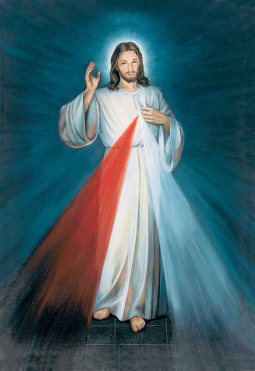
divine mercy.jpg

On April 30th, 2000 Pope John Paul II officially designated the second Sunday of Easter as Divine Mercy Sunday. The designation was in celebration of the canonization of St. Maria Faustina Kowalska—the Polish nun who received the devotion from Jesus!  My wife’s Confirmation saint is St. Maria Faustina and in recent years of our marriage I have been more familiar with her teaching by reading the Polish nun’s diary. While I could write for pages about the joys of  this feast, I will limit myself to three reasons for why I am grateful for Divine Mercy Sunday.

Judgment + _____________= Love

I bet you can’t guess blank to fill out the equation. Let me give you a clue: the word is in the title of today’s post.  You guessed it—mercy! The Church’s renewed focus on Divine Mercy to start the new millennium gave me a renewed focus as well. I grew up usually thinking about the power of God and His ability to judge us. For whatever reason I viewed God more as a judge and less like a merciful Father. Divine Mercy Sunday is a gift that helps remind me that God, though a judge, is a merciful judge and will give me many chances to correct the mistakes I make.

Sacrament of Confession: An Encounter with Mercy

Sacrament of Confession

The reading associated with this Sunday’s Mercy Sunday comes from John 20:19-31. Jesus’ first words to his apostles are, “Peace be with you” (John 20:19). That is one of the effects of divine mercy. In a world that is constantly pulling me each direction, it is nice to listen Christ’s words.

A second major point from today’s gospel reading is the institution of the sacrament of Confession. Jesus confers this sacrament of healing to his apostles when he say, “”Peace be with you [a second time]. As the Father has sent me, so I send you.” And when he had said this, he breathed on them and said to them, ‘Receive the Holy Spirit. Whose sins you forgive are forgiven them, and whose sins you retain are retained'” (John 20:21-23).  Time and time again Jesus reminds us of God’s mercy. In the 20th century, Jesus gave St. Faustina this same message. She states in her diary,

“’Proclaim that mercy is the greatest attribute of God. All the works of My hands are crowned with mercy.’” (No. 301)

My Marriage is a Visible Sign of God’s Mercy

Along with the fruit of the sacrament of Confession, Divine Mercy Sunday infuses life into my marriage. As I stated before, my wife’s Confirmation saint is St. Faustina. It was through the graces received through praying the chaplet of Divine Mercy that quelled any doubt in her mind of joining the Catholic Church. Additionally, I am thankful for Divine Mercy Sunday because this feast day is a great reminder of the amazing mercy my wife shows to me on a daily basis! When I get short or angry at a home situation, my wife is always willing to bestow mercy by the end of the day. I would like to think that I too am making progress– due in large part to St. Faustina and my wife’s intercession– but I have great strides to go still.

If you have never heard of St. Maria Faustina, I urge you to check out her diary from a local library, a friend, or your parish. For those pinched for time, I recommend simply printing off a small list of quotes from her about Divine Mercy and read them a few minutes a day during this Easter Season. I close with Jesus’ words [revealed to St. Faustina], “The prayer of a humble and loving soul disarms the anger of My Father and draws down an ocean of blessings” (Diary of Maria Faustina No. 320). Thank God for the gift of Divine Mercy Sunday!

Call to Action— Learn the Chaplet of Divine Mercy!

Below is a simple diagram of how to pray the Chaplet of Divine Mercy.

How to Pray Chaplet of Divine Mercy

Image credit: TheCatholicKid.com

Related Links

Ten Ways To Live Out the Doctrine of Divine Mercy

3 Ways St. Maria Faustina Provided Buoyancy in the Overwhelming Ocean of Life

Faustina’s Faith: How A Simple Polish Nun Changed My World

The Divine Mercy


P.S. Want to discover more beauty and awesomeness of the Catholic faith? If so, become an email subscriber. It’s simple:

  • Enter your email address in the Subscribe to Blog Via Email box
  • Hit the Subscribe button

Soon you will be receiving orthodox, simple, and cool Catholic content in your inbox. Thank you for reading!

Thank you for sharing!

3 Things I Learned about the Sacrament of Confession


Editor’s Note: This post was originally published on November 4, 2019.


According to the ancient Greek philosopher Democritus, “Raising children is an uncertain thing; success is reached only after a life of battle and worry.” Written over 2,000 years ago, that advice remains ever relevant and new. Parenting feels like a daily battle. Frustrations brew, chaos ensues, and bedtime routine feels like WWIII.

More often than not, my anger gets the best of me. Fatherhood takes a lot of work. Some days I make excuses to not put in the work. Failure and faux pas have become habit. I desire a reset. A new beginning. I want to do better. Become something better. Become someone better for me kids.

Thankfully, I don’t have to look [or travel] that far for the remedy.

The Sacrament of Confession provides Catholics an opportunity to be forgiven and restore one’s relationship with God and their neighbor. St. Isidore of Seville wrote, “Confession heals, confession justifies, confession grants pardon of sin, all hope consists in confession; in confession there is a chance for mercy.”

This school year my oldest child receives his First Confession and Eucharist. Next week he will receive the Sacrament of Reconciliation. My wife and I have been going through the religious education lessons to prepare him for an understanding and proper disposition to receive the sacrament of healing. In teaching him the basics about this sacrament, I too, actually learned something about Confession.

The Simpler Is Better

Albert Einstein famously quipped, “If you can’t explain it to a sixyearoldyou don’t understand it yourself.” It definitely takes a talent to be able to articulate the complexities of the Catholic faith to young minds. This is something I struggle with a bit, but I am getting better.

Simple is better

Less is more. I never actually understand that phrase until after going through these lessons with my son. Sometimes discussion about the sacraments can get bogged down with technical jargon or bias. Essentially the main questions kids and new converts to the faith wonder include:

  • What are sacraments?
  • Why are sacraments important?
  • How do I receive the sacraments

According to the Catechism of the Catholic Church paragraph 1131, “The sacraments are efficacious [effective] signs of grace, instituted by Christ and entrusted to the Church, by which divine life is dispensed to us.” To put it is more basic terms, a sacrament is a visible sign of God’s invisible grace. By receiving the sacraments, we grow closer to God.

A Brief History of Sin and Salvation

Adam and Eve disobeyed God. This disobedience caused sin to enter into the world. Sin separates us from God. God sent His only Son Jesus to restore that relationship through his death on the Cross. Before Jesus’ Ascension he promised to send the Holy Spirit to guide the Apostles. On Pentecost the Holy Spirit met the Apostles and gave them the ability to preach the Gospel.

Sacrament of Confession

The Apostles, the first bishops, ordained their successors. This Apostolic succession continued throughout history. Jesus gave Peter and the rest of the Apostles the authority to forgive sins (see John 20:1-23) and consecrate the Eucharist. Through the Sacrament of Holy Orders, the successors of the Apostles (bishops) ordain men as priests. Jesus Christ works through those men in the Sacraments of Confession and Eucharist.

We explained to our son that Jesus is working through the priest.  When he will confess his sins to our priest it will actually be Jesus that he will be talking to and it will be Jesus who forgives sins. The priest is an instrument by which God works through.

Mercy

Another lesson I [re]learned in preparing my son for the Sacrament of Confession, is that everyone is in need of God’s mercy. “Even the pope goes to confession!” I told my eight-year-old. I went on to tell him about Saint Pope John XXII who received that sacrament daily.

Although the sacrament of Baptism cleanses us from original sin, humans still have the ability to freely choose to love or to not love God. Choosing to not love God or others results in sin or separation. As a father, I am definitely reminded of my need for forgiveness. Patience does not come naturally. This virtue gets tested daily, hourly, and sometimes every minute in the Chicoine household.

Being able to tell Jesus through the priest of my failures as a parent, husband, friend, worker, and neighbor is an incredible gift. Even more incredible is God’s mercy of absolving me from my past sins.

Reaping the Fruit of Our Sacramental Marriage

The third thing I learned about the Catholic faith while teaching my son about Confession is that the Holy Spirit delays certain gifts and gives them at key times in our life. My wife and I received the Sacrament of Matrimony in 2010. We took [and still take] our faith seriously. The primary purpose of marriage is to help the spouses grow in holiness.

Fruit

According to the Catechism paragraph 1661,

The sacrament of Matrimony signifies the union of Christ and the Church. It gives spouses the grace to love each other with the love with which Christ has loved his Church; the grace of the sacrament thus perfects the human love of the spouses, strengthens their indissoluble unity, and sanctifies them on the way to eternal life (cf. Council of Trent: DS 1799).

In my post, Toddlers: An Adorable Trace of the Trinity, I wrote, “A fruit of the sacrament of marriage is children…I think of my children as the best gift that God has given me personally to grow in virtue daily.” Kids test your love. They give you opportunities to grow in understanding, patience, kindness, generosity, forgiveness, and gratitude to name just a few virtues. Educating our children about the faith provides my wife and I chances to rekindle our love for the Church and Christ.

before and after confession meme

If you are experiencing doubt, impatience, anger, resentment, worry, or other vices I strongly encourage you to examine your conscience and ask God for forgiveness in the Sacrament of Confession.  Build up the Body of Christ and seek God’s mercy!

Related Links

What is the Sacrament of Confession

Why I Love the Sacrament of Confession

Afraid of going to confession? Pray this prayer for courage

How the Sacrament of Confession is Prefigured in the Old Testament

Thank you for sharing!